‘Enemy’ Insults and Questioning Putin: Steve Rosenberg on the Tightrope of Reporting from Russia
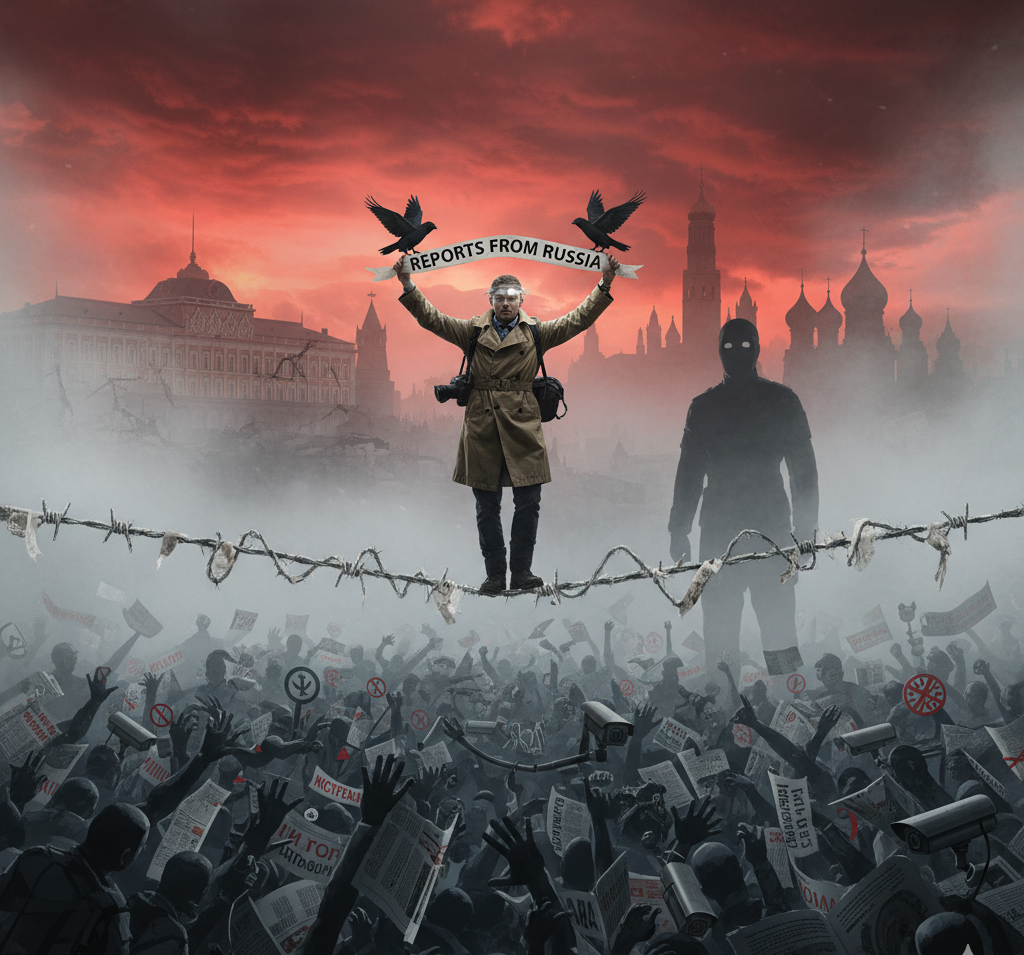
Reporting from Russia has never been an easy assignment. But in recent years, it has become one of the most delicate, dangerous, and emotionally demanding roles in international journalism. Few understand this reality better than Steve Rosenberg, the BBC’s long-time Russia editor, whose work has placed him at the intersection of power, propaganda, and public scrutiny.
From being openly labelled an “enemy” by pro-Kremlin commentators to questioning President Vladimir Putin in tightly controlled press conferences, Rosenberg’s experience offers a rare insight into what it means to report independently from a country where journalism itself is often treated as a political act.
This is the story of walking a tightrope between asking questions and avoiding expulsion, between telling the truth and navigating state hostility, and between professional duty and personal risk.
Reporting in a Climate of Suspicion
Russia’s relationship with foreign media has grown increasingly tense, particularly since the escalation of the Ukraine conflict. Independent journalism is frequently portrayed by state-aligned voices as a threat rather than a public service. In this environment, foreign correspondents are often viewed with suspicion, accused of bias, or dismissed as instruments of Western influence.
Steve Rosenberg has repeatedly found himself at the centre of this tension. On Russian state television and social media platforms, he has been criticised, mocked, and sometimes openly branded an “enemy.” These attacks are rarely subtle. They are designed to delegitimise journalists and cast doubt on the very idea of independent reporting.
Yet Rosenberg continues to work within Russia, filing reports that aim to explain not just what the Kremlin says, but how Russian society is being shaped by censorship, nationalism, and political pressure.
The Power and Risk of Asking Questions
One of the most defining aspects of Rosenberg’s reporting has been his willingness to ask direct questions of President Vladimir Putin. In a political culture where public questioning is often scripted and controlled, such moments stand out sharply.
During high-profile press conferences, Rosenberg has asked about issues ranging from political freedoms to the war in Ukraine. These questions are not just journalistic exercises — they are carefully calculated risks.
A single question can trigger backlash, both online and offline. It can invite public criticism from officials or spark nationalist outrage. But not asking, Rosenberg has implied through his work, would mean accepting the erosion of journalism’s core purpose.
For audiences outside Russia, these exchanges offer a rare glimpse into how power responds when challenged, even politely, in public.
Walking the Line Between Access and Integrity
Foreign correspondents work under many limitations in Russia. Their visas can be taken away from them at any time; their accreditations can sometimes take a long time or may never come through.
Laws can change quickly, and sometimes without any explanation. Access to report, along with editorial independence, is a huge balancing act each day. If you apply too much pressure in your favour you risk your expulsion. If you back off too much you run the risk of only producing low-level reporting or colluding with the authorities.
Rosenberg's style is to stay calm, objective, and relentless in reporting. He chooses not to sensationalise, but instead reports with an eye for tone, context, and detail about the pauses in statements by officials, the language used, and the repeated themes in the narratives put forth by Russian officials.
Although Rosenberg is also operating in an extremely hostile environment his reporting is critical with the absence of provocation.
The Emotional Weight of Reporting Under Pressure
Beyond professional risks, there is a human cost to reporting in such conditions. Constant surveillance, public criticism, and the knowledge that one’s words are being closely monitored can take a psychological toll.
Rosenberg has spoken, implicitly through his reporting, about the emotional strain of working in a place where colleagues in independent Russian media have been forced into exile, silenced, or imprisoned.
For foreign journalists, there is also the moral challenge of telling stories that may put sources at risk. Every interview, every street conversation must be weighed against potential consequences for those who speak.
Journalism, in this context, becomes not just a profession but a series of ethical decisions made under pressure.
Journalism vs Propaganda
One of the clearest themes in Rosenberg’s work is the contrast between journalism and state messaging. Russian state media often presents a carefully curated version of reality — one that emphasises strength, unity, and external threats.
Independent reporting disrupts this narrative by introducing nuance, contradiction, and lived experience. It asks uncomfortable questions and highlights inconsistencies.
This is precisely why such journalism is seen as dangerous. Not because it shouts, but because it observes.
Rosenberg’s reports often include ordinary voices citizens reacting to economic pressure, families navigating uncertainty, or people choosing silence out of fear. These human stories quietly challenge official narratives without direct confrontation.
Why Foreign Correspondents Still Matter
In an age of information warfare, the role of foreign correspondents has never been more important. When domestic media is restricted, outside reporting becomes a vital bridge between closed societies and the wider world.
Steve Rosenberg’s work helps international audiences understand not just Russian policy, but Russian reality the gap between what is said and what is lived.
At the same time, his presence inside Russia serves as a reminder that scrutiny still exists, even under pressure. Those questions can still be asked, even when answers are carefully managed.