Bhaiyaji Kahin LIVE: India–US Trade Deal Takes Center Stage Amid Tariff Talks, Modi–Trump Dynamics
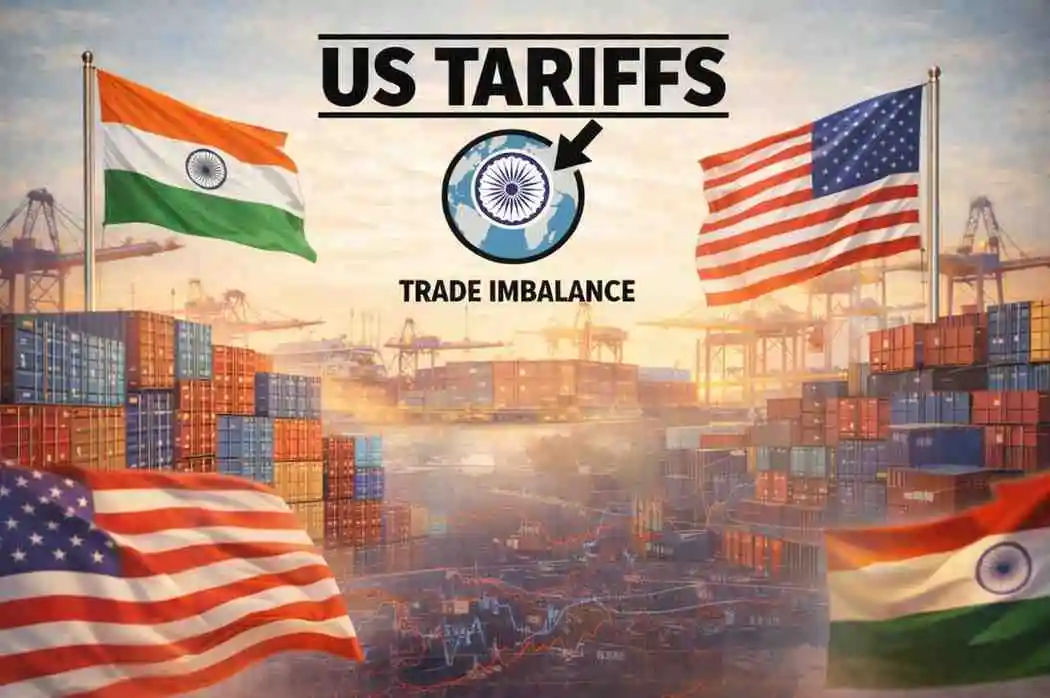
India and the United States share a complex trade relationship valued at hundreds of billions of dollars. While strategic and defence ties have strengthened over the years, trade negotiations have often faced friction, particularly around tariffs, market access, and domestic industry protection.
During the LIVE discussion, Prateek Trivedi highlighted that:
- The trade deal is not just economic, but deeply political
- Tariff policies are being used as negotiation tools
- Leadership chemistry between Modi and Trump plays a role bigger than many admit
With global supply chains shifting and elections shaping policy tone in both nations, the timing of renewed trade talks is anything but accidental.
💼 Understanding the Core Trade Issues
1. Tariffs: The Biggest Roadblock
One of the most contentious points between India and the US has been tariff structures. The US has repeatedly raised concerns about high Indian import duties on:
- Agricultural products
- Medical devices
- Electronics and tech hardware
India, on the other hand, argues that tariffs are necessary to:
- Protect domestic manufacturing
- Support MSMEs
- Promote self-reliance under initiatives like Make in India
During the LIVE show, it was noted that tariffs are no longer just economic barriers — they are bargaining chips
2. US Tariff Pressure and Trump’s Influence
Donald Trump’s trade philosophy has always leaned toward “America First”, and his previous term saw:
- Increased tariffs on multiple countries
- Aggressive trade negotiations
- Pressure on partners to reduce trade deficits
Prateek Trivedi pointed out that if Trump regains political influence, India may face tougher tariff demands, but also clearer, deal-driven negotiations.
Interestingly, Trump has often spoken positively about PM Modi, creating a unique mix of personal diplomacy and hard economics.
🤝 Modi–Trump Equation: Personality Meets Policy
Strong Optics, Tough Negotiations
Public rallies, high-profile visits, and warm public statements have defined the Modi–Trump relationship in the past. However, behind the scenes, trade talks have been far from smooth.
The LIVE discussion emphasized:
- Personal rapport helps open doors
- But economic interests still dominate decisions
- Symbolism does not always translate into concessions
PM Modi’s approach has been to balance global cooperation with domestic priorities, ensuring India is not seen as yielding under pressure.
Strategic Partnership Beyond Trade
India–US relations extend far beyond trade:
- Defence cooperation
- Indo-Pacific security
- Technology and semiconductor supply chains
- Counter-terrorism efforts
Because of this broader partnership, both sides are cautious not to let trade disputes derail long-term strategic goals.
🌍 Global Context: Why This Deal Matters Now
Supply Chain Realignment
With companies moving away from over-dependence on single manufacturing hubs, India is positioning itself as a reliable alternative. The US sees India as:
- A democratic ally
- A growing consumer market
- A manufacturing and technology partner
A structured trade deal could accelerate this shift significantly.
Competition with China
Although rarely stated directly, China remains the unspoken factor in India–US trade discussions. Strengthening economic ties with India serves Washington’s broader goal of diversifying partnerships in Asia.
For India, closer trade ties with the US help:
- Reduce strategic vulnerability
- Gain access to advanced technology
- Strengthen export competitiveness
The global spotlight is once again on India–US relations as discussions around a potential trade deal, tariff restructuring, and political recalibration dominate headlines. In a recent “Bhaiyaji Kahin” LIVE session with Prateek Trivedi, these themes were unpacked with sharp political insight, economic context, and ground-level implications for India, the United States, and global markets.
At the heart of the discussion lies a familiar yet evolving triangle: India’s economic ambitions, America’s protectionist instincts, and the political personalities of Prime Minister Narendra Modi and former US President Donald Trump. With the possibility of Trump’s renewed political influence and India’s growing global leverage, the trade conversation has regained urgency.
This article breaks down the key takeaways, background context, and what this potential India–US trade deal could realistically mean for businesses, consumers, and geopolitics.
📌 Why the India–US Trade Deal Is Back in the News
India and the United States share a complex trade relationship valued at hundreds of billions of dollars. While strategic and defence ties have strengthened over the years, trade negotiations have often faced friction, particularly around tariffs, market access, and domestic industry protection.
During the LIVE discussion, Prateek Trivedi highlighted that:
- The trade deal is not just economic, but deeply political
- Tariff policies are being used as negotiation tools
- Leadership chemistry between Modi and Trump plays a role bigger than many admit
With global supply chains shifting and elections shaping policy tone in both nations, the timing of renewed trade talks is anything but accidental.
💼 Understanding the Core Trade Issues
1. Tariffs: The Biggest Roadblock
One of the most contentious points between India and the US has been tariff structures. The US has repeatedly raised concerns about high Indian import duties on:
- Agricultural products
- Medical devices
- Electronics and tech hardware
India, on the other hand, argues that tariffs are necessary to:
- Protect domestic manufacturing
- Support MSMEs
- Promote self-reliance under initiatives like Make in India
During the LIVE show, it was noted that tariffs are no longer just economic barriers — they are bargaining chips
2. US Tariff Pressure and Trump’s Influence
Donald Trump’s trade philosophy has always leaned toward “America First”, and his previous term saw:
- Increased tariffs on multiple countries
- Aggressive trade negotiations
- Pressure on partners to reduce trade deficits
Prateek Trivedi pointed out that if Trump regains political influence, India may face tougher tariff demands, but also clearer, deal-driven negotiations.
Interestingly, Trump has often spoken positively about PM Modi, creating a unique mix of personal diplomacy and hard economics.
🤝 Modi–Trump Equation: Personality Meets Policy
Strong Optics, Tough Negotiations
Public rallies, high-profile visits, and warm public statements have defined the Modi–Trump relationship in the past. However, behind the scenes, trade talks have been far from smooth.
The LIVE discussion emphasized:
- Personal rapport helps open doors
- But economic interests still dominate decisions
- Symbolism does not always translate into concessions
PM Modi’s approach has been to balance global cooperation with domestic priorities, ensuring India is not seen as yielding under pressure.
Strategic Partnership Beyond Trade
India–US relations extend far beyond trade:
- Defence cooperation
- Indo-Pacific security
- Technology and semiconductor supply chains
- Counter-terrorism efforts
Because of this broader partnership, both sides are cautious not to let trade disputes derail long-term strategic goals.
🌍 Global Context: Why This Deal Matters Now
Supply Chain Realignment
With companies moving away from over-dependence on single manufacturing hubs, India is positioning itself as a reliable alternative. The US sees India as:
- A democratic ally
- A growing consumer market
- A manufacturing and technology partner
A structured trade deal could accelerate this shift significantly.
Competition with China
Although rarely stated directly, China remains the unspoken factor in India–US trade discussions. Strengthening economic ties with India serves Washington’s broader goal of diversifying partnerships in Asia.
For India, closer trade ties with the US help:
- Reduce strategic vulnerability
- Gain access to advanced technology
- Strengthen export competitiveness
At the heart of the discussion lies a familiar yet evolving triangle: India’s economic ambitions, America’s protectionist instincts, and the political personalities of Prime Minister Narendra Modi and former US President Donald Trump. With the possibility of Trump’s renewed political influence and India’s growing global leverage, the trade conversation has regained urgency.
This article breaks down the key takeaways, background context, and what this potential India–US trade deal could realistically mean for businesses, consumers, and geopolitics.
📌 Why the India–US Trade Deal Is Back in the News
India and the United States share a complex trade relationship valued at hundreds of billions of dollars. While strategic and defence ties have strengthened over the years, trade negotiations have often faced friction, particularly around tariffs, market access, and domestic industry protection.
During the LIVE discussion, Prateek Trivedi highlighted that:
- The trade deal is not just economic, but deeply political
- Tariff policies are being used as negotiation tools
- Leadership chemistry between Modi and Trump plays a role bigger than many admit
With global supply chains shifting and elections shaping policy tone in both nations, the timing of renewed trade talks is anything but accidental.
💼 Understanding the Core Trade Issues
1. Tariffs: The Biggest Roadblock
One of the most contentious points between India and the US has been tariff structures. The US has repeatedly raised concerns about high Indian import duties on:
- Agricultural products
- Medical devices
- Electronics and tech hardware
India, on the other hand, argues that tariffs are necessary to:
- Protect domestic manufacturing
- Support MSMEs
- Promote self-reliance under initiatives like Make in India
During the LIVE show, it was noted that tariffs are no longer just economic barriers — they are bargaining chips
2. US Tariff Pressure and Trump’s Influence
Donald Trump’s trade philosophy has always leaned toward “America First”, and his previous term saw:
- Increased tariffs on multiple countries
- Aggressive trade negotiations
- Pressure on partners to reduce trade deficits
Prateek Trivedi pointed out that if Trump regains political influence, India may face tougher tariff demands, but also clearer, deal-driven negotiations.
Interestingly, Trump has often spoken positively about PM Modi, creating a unique mix of personal diplomacy and hard economics.
🤝 Modi–Trump Equation: Personality Meets Policy
Strong Optics, Tough Negotiations
Public rallies, high-profile visits, and warm public statements have defined the Modi–Trump relationship in the past. However, behind the scenes, trade talks have been far from smooth.
The LIVE discussion emphasized:
- Personal rapport helps open doors
- But economic interests still dominate decisions
- Symbolism does not always translate into concessions
PM Modi’s approach has been to balance global cooperation with domestic priorities, ensuring India is not seen as yielding under pressure.
Strategic Partnership Beyond Trade
India–US relations extend far beyond trade:
- Defence cooperation
- Indo-Pacific security
- Technology and semiconductor supply chains
- Counter-terrorism efforts
Because of this broader partnership, both sides are cautious not to let trade disputes derail long-term strategic goals.
🌍 Global Context: Why This Deal Matters Now
Supply Chain Realignment
With companies moving away from over-dependence on single manufacturing hubs, India is positioning itself as a reliable alternative. The US sees India as:
- A democratic ally
- A growing consumer market
- A manufacturing and technology partner
A structured trade deal could accelerate this shift significantly.
Competition with China
Although rarely stated directly, China remains the unspoken factor in India–US trade discussions. Strengthening economic ties with India serves Washington’s broader goal of diversifying partnerships in Asia.
For India, closer trade ties with the US help:
- Reduce strategic vulnerability
- Gain access to advanced technology
- Strengthen export competitiveness
The global spotlight is once again on India–US relations as discussions around a potential trade deal, tariff restructuring, and political recalibration dominate headlines. In a recent “Bhaiyaji Kahin” LIVE session with Prateek Trivedi, these themes were unpacked with sharp political insight, economic context, and ground-level implications for India, the United States, and global markets.
At the heart of the discussion lies a familiar yet evolving triangle: India’s economic ambitions, America’s protectionist instincts, and the political personalities of Prime Minister Narendra Modi and former US President Donald Trump. With the possibility of Trump’s renewed political influence and India’s growing global leverage, the trade conversation has regained urgency.
This article breaks down the key takeaways, background context, and what this potential India–US trade deal could realistically mean for businesses, consumers, and geopolitics.
📌 Why the India–US Trade Deal Is Back in the News
India and the United States share a complex trade relationship valued at hundreds of billions of dollars. While strategic and defence ties have strengthened over the years, trade negotiations have often faced friction, particularly around tariffs, market access, and domestic industry protection.
During the LIVE discussion, Prateek Trivedi highlighted that:
- The trade deal is not just economic, but deeply political
- Tariff policies are being used as negotiation tools
- Leadership chemistry between Modi and Trump plays a role bigger than many admit
With global supply chains shifting and elections shaping policy tone in both nations, the timing of renewed trade talks is anything but accidental.
💼 Understanding the Core Trade Issues
1. Tariffs: The Biggest Roadblock
One of the most contentious points between India and the US has been tariff structures. The US has repeatedly raised concerns about high Indian import duties on:
- Agricultural products
- Medical devices
- Electronics and tech hardware
India, on the other hand, argues that tariffs are necessary to:
- Protect domestic manufacturing
- Support MSMEs
- Promote self-reliance under initiatives like Make in India
During the LIVE show, it was noted that tariffs are no longer just economic barriers — they are bargaining chips
2. US Tariff Pressure and Trump’s Influence
Donald Trump’s trade philosophy has always leaned toward “America First”, and his previous term saw:
- Increased tariffs on multiple countries
- Aggressive trade negotiations
- Pressure on partners to reduce trade deficits
Prateek Trivedi pointed out that if Trump regains political influence, India may face tougher tariff demands, but also clearer, deal-driven negotiations.
Interestingly, Trump has often spoken positively about PM Modi, creating a unique mix of personal diplomacy and hard economics.
🤝 Modi–Trump Equation: Personality Meets Policy
Strong Optics, Tough Negotiations
Public rallies, high-profile visits, and warm public statements have defined the Modi–Trump relationship in the past. However, behind the scenes, trade talks have been far from smooth.
The LIVE discussion emphasized:
- Personal rapport helps open doors
- But economic interests still dominate decisions
- Symbolism does not always translate into concessions
PM Modi’s approach has been to balance global cooperation with domestic priorities, ensuring India is not seen as yielding under pressure.
Strategic Partnership Beyond Trade
India–US relations extend far beyond trade:
- Defence cooperation
- Indo-Pacific security
- Technology and semiconductor supply chains
- Counter-terrorism efforts
Because of this broader partnership, both sides are cautious not to let trade disputes derail long-term strategic goals.
🌍 Global Context: Why This Deal Matters Now
Supply Chain Realignment
With companies moving away from over-dependence on single manufacturing hubs, India is positioning itself as a reliable alternative. The US sees India as:
- A democratic ally
- A growing consumer market
- A manufacturing and technology partner
A structured trade deal could accelerate this shift significantly.
Competition with China
Although rarely stated directly, China remains the unspoken factor in India–US trade discussions. Strengthening economic ties with India serves Washington’s broader goal of diversifying partnerships in Asia.
For India, closer trade ties with the US help:
- Reduce strategic vulnerability
- Gain access to advanced technology
- Strengthen export competitiveness
This article breaks down the key takeaways, background context, and what this potential India–US trade deal could realistically mean for businesses, consumers, and geopolitics.
📌 Why the India–US Trade Deal Is Back in the News
India and the United States share a complex trade relationship valued at hundreds of billions of dollars. While strategic and defence ties have strengthened over the years, trade negotiations have often faced friction, particularly around tariffs, market access, and domestic industry protection.
During the LIVE discussion, Prateek Trivedi highlighted that:
- The trade deal is not just economic, but deeply political
- Tariff policies are being used as negotiation tools
- Leadership chemistry between Modi and Trump plays a role bigger than many admit
With global supply chains shifting and elections shaping policy tone in both nations, the timing of renewed trade talks is anything but accidental.
💼 Understanding the Core Trade Issues
1. Tariffs: The Biggest Roadblock
One of the most contentious points between India and the US has been tariff structures. The US has repeatedly raised concerns about high Indian import duties on:
- Agricultural products
- Medical devices
- Electronics and tech hardware
India, on the other hand, argues that tariffs are necessary to:
- Protect domestic manufacturing
- Support MSMEs
- Promote self-reliance under initiatives like Make in India
During the LIVE show, it was noted that tariffs are no longer just economic barriers — they are bargaining chips
2. US Tariff Pressure and Trump’s Influence
Donald Trump’s trade philosophy has always leaned toward “America First”, and his previous term saw:
- Increased tariffs on multiple countries
- Aggressive trade negotiations
- Pressure on partners to reduce trade deficits
Prateek Trivedi pointed out that if Trump regains political influence, India may face tougher tariff demands, but also clearer, deal-driven negotiations.
Interestingly, Trump has often spoken positively about PM Modi, creating a unique mix of personal diplomacy and hard economics.
🤝 Modi–Trump Equation: Personality Meets Policy
Strong Optics, Tough Negotiations
Public rallies, high-profile visits, and warm public statements have defined the Modi–Trump relationship in the past. However, behind the scenes, trade talks have been far from smooth.
The LIVE discussion emphasized:
- Personal rapport helps open doors
- But economic interests still dominate decisions
- Symbolism does not always translate into concessions
PM Modi’s approach has been to balance global cooperation with domestic priorities, ensuring India is not seen as yielding under pressure.
Strategic Partnership Beyond Trade
India–US relations extend far beyond trade:
- Defence cooperation
- Indo-Pacific security
- Technology and semiconductor supply chains
- Counter-terrorism efforts
Because of this broader partnership, both sides are cautious not to let trade disputes derail long-term strategic goals.
🌍 Global Context: Why This Deal Matters Now
Supply Chain Realignment
With companies moving away from over-dependence on single manufacturing hubs, India is positioning itself as a reliable alternative. The US sees India as:
- A democratic ally
- A growing consumer market
- A manufacturing and technology partner
A structured trade deal could accelerate this shift significantly.
Competition with China
Although rarely stated directly, China remains the unspoken factor in India–US trade discussions. Strengthening economic ties with India serves Washington’s broader goal of diversifying partnerships in Asia.
For India, closer trade ties with the US help:
- Reduce strategic vulnerability
- Gain access to advanced technology
- Strengthen export competitiveness
The global spotlight is once again on India–US relations as discussions around a potential trade deal, tariff restructuring, and political recalibration dominate headlines. In a recent “Bhaiyaji Kahin” LIVE session with Prateek Trivedi, these themes were unpacked with sharp political insight, economic context, and ground-level implications for India, the United States, and global markets.
At the heart of the discussion lies a familiar yet evolving triangle: India’s economic ambitions, America’s protectionist instincts, and the political personalities of Prime Minister Narendra Modi and former US President Donald Trump. With the possibility of Trump’s renewed political influence and India’s growing global leverage, the trade conversation has regained urgency.
This article breaks down the key takeaways, background context, and what this potential India–US trade deal could realistically mean for businesses, consumers, and geopolitics.
📌 Why the India–US Trade Deal Is Back in the News
India and the United States share a complex trade relationship valued at hundreds of billions of dollars. While strategic and defence ties have strengthened over the years, trade negotiations have often faced friction, particularly around tariffs, market access, and domestic industry protection.
During the LIVE discussion, Prateek Trivedi highlighted that:
- The trade deal is not just economic, but deeply political
- Tariff policies are being used as negotiation tools
- Leadership chemistry between Modi and Trump plays a role bigger than many admit
With global supply chains shifting and elections shaping policy tone in both nations, the timing of renewed trade talks is anything but accidental.
💼 Understanding the Core Trade Issues
1. Tariffs: The Biggest Roadblock
One of the most contentious points between India and the US has been tariff structures. The US has repeatedly raised concerns about high Indian import duties on:
- Agricultural products
- Medical devices
- Electronics and tech hardware
India, on the other hand, argues that tariffs are necessary to:
- Protect domestic manufacturing
- Support MSMEs
- Promote self-reliance under initiatives like Make in India
During the LIVE show, it was noted that tariffs are no longer just economic barriers — they are bargaining chips
2. US Tariff Pressure and Trump’s Influence
Donald Trump’s trade philosophy has always leaned toward “America First”, and his previous term saw:
- Increased tariffs on multiple countries
- Aggressive trade negotiations
- Pressure on partners to reduce trade deficits
Prateek Trivedi pointed out that if Trump regains political influence, India may face tougher tariff demands, but also clearer, deal-driven negotiations.
Interestingly, Trump has often spoken positively about PM Modi, creating a unique mix of personal diplomacy and hard economics.
🤝 Modi–Trump Equation: Personality Meets Policy
Strong Optics, Tough Negotiations
Public rallies, high-profile visits, and warm public statements have defined the Modi–Trump relationship in the past. However, behind the scenes, trade talks have been far from smooth.
The LIVE discussion emphasized:
- Personal rapport helps open doors
- But economic interests still dominate decisions
- Symbolism does not always translate into concessions
PM Modi’s approach has been to balance global cooperation with domestic priorities, ensuring India is not seen as yielding under pressure.
Strategic Partnership Beyond Trade
India–US relations extend far beyond trade:
- Defence cooperation
- Indo-Pacific security
- Technology and semiconductor supply chains
- Counter-terrorism efforts
Because of this broader partnership, both sides are cautious not to let trade disputes derail long-term strategic goals.
🌍 Global Context: Why This Deal Matters Now
Supply Chain Realignment
With companies moving away from over-dependence on single manufacturing hubs, India is positioning itself as a reliable alternative. The US sees India as:
- A democratic ally
- A growing consumer market
- A manufacturing and technology partner
A structured trade deal could accelerate this shift significantly.
Competition with China
Although rarely stated directly, China remains the unspoken factor in India–US trade discussions. Strengthening economic ties with India serves Washington’s broader goal of diversifying partnerships in Asia.
For India, closer trade ties with the US help:
- Reduce strategic vulnerability
- Gain access to advanced technology
- Strengthen export competitiveness
At the heart of the discussion lies a familiar yet evolving triangle: India’s economic ambitions, America’s protectionist instincts, and the political personalities of Prime Minister Narendra Modi and former US President Donald Trump. With the possibility of Trump’s renewed political influence and India’s growing global leverage, the trade conversation has regained urgency.
This article breaks down the key takeaways, background context, and what this potential India–US trade deal could realistically mean for businesses, consumers, and geopolitics.
📌 Why the India–US Trade Deal Is Back in the News
India and the United States share a complex trade relationship valued at hundreds of billions of dollars. While strategic and defence ties have strengthened over the years, trade negotiations have often faced friction, particularly around tariffs, market access, and domestic industry protection.
During the LIVE discussion, Prateek Trivedi highlighted that:
- The trade deal is not just economic, but deeply political
- Tariff policies are being used as negotiation tools
- Leadership chemistry between Modi and Trump plays a role bigger than many admit
With global supply chains shifting and elections shaping policy tone in both nations, the timing of renewed trade talks is anything but accidental.
💼 Understanding the Core Trade Issues
1. Tariffs: The Biggest Roadblock
One of the most contentious points between India and the US has been tariff structures. The US has repeatedly raised concerns about high Indian import duties on:
- Agricultural products
- Medical devices
- Electronics and tech hardware
India, on the other hand, argues that tariffs are necessary to:
- Protect domestic manufacturing
- Support MSMEs
- Promote self-reliance under initiatives like Make in India
During the LIVE show, it was noted that tariffs are no longer just economic barriers — they are bargaining chips
2. US Tariff Pressure and Trump’s Influence
Donald Trump’s trade philosophy has always leaned toward “America First”, and his previous term saw:
- Increased tariffs on multiple countries
- Aggressive trade negotiations
- Pressure on partners to reduce trade deficits
Prateek Trivedi pointed out that if Trump regains political influence, India may face tougher tariff demands, but also clearer, deal-driven negotiations.
Interestingly, Trump has often spoken positively about PM Modi, creating a unique mix of personal diplomacy and hard economics.
🤝 Modi–Trump Equation: Personality Meets Policy
Strong Optics, Tough Negotiations
Public rallies, high-profile visits, and warm public statements have defined the Modi–Trump relationship in the past. However, behind the scenes, trade talks have been far from smooth.
The LIVE discussion emphasized:
- Personal rapport helps open doors
- But economic interests still dominate decisions
- Symbolism does not always translate into concessions
PM Modi’s approach has been to balance global cooperation with domestic priorities, ensuring India is not seen as yielding under pressure.
Strategic Partnership Beyond Trade
India–US relations extend far beyond trade:
- Defence cooperation
- Indo-Pacific security
- Technology and semiconductor supply chains
- Counter-terrorism efforts
Because of this broader partnership, both sides are cautious not to let trade disputes derail long-term strategic goals.
🌍 Global Context: Why This Deal Matters Now
Supply Chain Realignment
With companies moving away from over-dependence on single manufacturing hubs, India is positioning itself as a reliable alternative. The US sees India as:
- A democratic ally
- A growing consumer market
- A manufacturing and technology partner
A structured trade deal could accelerate this shift significantly.
Competition with China
Although rarely stated directly, China remains the unspoken factor in India–US trade discussions. Strengthening economic ties with India serves Washington’s broader goal of diversifying partnerships in Asia.
For India, closer trade ties with the US help:
- Reduce strategic vulnerability
- Gain access to advanced technology
- Strengthen export competitiveness
The global spotlight is once again on India–US relations as discussions around a potential trade deal, tariff restructuring, and political recalibration dominate headlines. In a recent “Bhaiyaji Kahin” LIVE session with Prateek Trivedi, these themes were unpacked with sharp political insight, economic context, and ground-level implications for India, the United States, and global markets.
At the heart of the discussion lies a familiar yet evolving triangle: India’s economic ambitions, America’s protectionist instincts, and the political personalities of Prime Minister Narendra Modi and former US President Donald Trump. With the possibility of Trump’s renewed political influence and India’s growing global leverage, the trade conversation has regained urgency.
This article breaks down the key takeaways, background context, and what this potential India–US trade deal could realistically mean for businesses, consumers, and geopolitics.
📌 Why the India–US Trade Deal Is Back in the News
India and the United States share a complex trade relationship valued at hundreds of billions of dollars. While strategic and defence ties have strengthened over the years, trade negotiations have often faced friction, particularly around tariffs, market access, and domestic industry protection.
During the LIVE discussion, Prateek Trivedi highlighted that:
- The trade deal is not just economic, but deeply political
- Tariff policies are being used as negotiation tools
- Leadership chemistry between Modi and Trump plays a role bigger than many admit
With global supply chains shifting and elections shaping policy tone in both nations, the timing of renewed trade talks is anything but accidental.
💼 Understanding the Core Trade Issues
1. Tariffs: The Biggest Roadblock
One of the most contentious points between India and the US has been tariff structures. The US has repeatedly raised concerns about high Indian import duties on:
- Agricultural products
- Medical devices
- Electronics and tech hardware
India, on the other hand, argues that tariffs are necessary to:
- Protect domestic manufacturing
- Support MSMEs
- Promote self-reliance under initiatives like Make in India
During the LIVE show, it was noted that tariffs are no longer just economic barriers — they are bargaining chips
2. US Tariff Pressure and Trump’s Influence
Donald Trump’s trade philosophy has always leaned toward “America First”, and his previous term saw:
- Increased tariffs on multiple countries
- Aggressive trade negotiations
- Pressure on partners to reduce trade deficits
Prateek Trivedi pointed out that if Trump regains political influence, India may face tougher tariff demands, but also clearer, deal-driven negotiations.
Interestingly, Trump has often spoken positively about PM Modi, creating a unique mix of personal diplomacy and hard economics.
🤝 Modi–Trump Equation: Personality Meets Policy
Strong Optics, Tough Negotiations
Public rallies, high-profile visits, and warm public statements have defined the Modi–Trump relationship in the past. However, behind the scenes, trade talks have been far from smooth.
The LIVE discussion emphasized:
- Personal rapport helps open doors
- But economic interests still dominate decisions
- Symbolism does not always translate into concessions
PM Modi’s approach has been to balance global cooperation with domestic priorities, ensuring India is not seen as yielding under pressure.
Strategic Partnership Beyond Trade
India–US relations extend far beyond trade:
- Defence cooperation
- Indo-Pacific security
- Technology and semiconductor supply chains
- Counter-terrorism efforts
Because of this broader partnership, both sides are cautious not to let trade disputes derail long-term strategic goals.
🌍 Global Context: Why This Deal Matters Now
Supply Chain Realignment
With companies moving away from over-dependence on single manufacturing hubs, India is positioning itself as a reliable alternative. The US sees India as:
- A democratic ally
- A growing consumer market
- A manufacturing and technology partner
A structured trade deal could accelerate this shift significantly.
Competition with China
Although rarely stated directly, China remains the unspoken factor in India–US trade discussions. Strengthening economic ties with India serves Washington’s broader goal of diversifying partnerships in Asia.
For India, closer trade ties with the US help:
- Reduce strategic vulnerability
- Gain access to advanced technology
- Strengthen export competitiveness