India’s education system is undergoing a quiet but meaningful transformation in 2026
Competitive exams remain a central part of India’s academic ecosystem, but even here, change is underway. National-level entrance exams are being streamlined to reduce redundancy and pressure on students who previously had to prepare for multiple tests with overlapping syllabi. Digital exam infrastructure has improved, making online testing more reliable and accessible. However, concerns around fairness, exam stress, and unequal access to coaching resources persist, highlighting the need for more inclusive solutions that do not disadvantage students from rural or economically weaker backgrounds.
Higher education in India is also in a phase of recalibration. Universities and colleges are increasingly focusing on employability alongside academic excellence. New-age courses in artificial intelligence, data science, cybersecurity, climate studies, and digital marketing are becoming mainstream rather than niche. At the same time, traditional degrees are being restructured to include internships, research projects, and industry exposure. This shift reflects a growing realisation that degrees alone are no longer enough; practical skills and adaptability are just as critical in today’s job market.
Digital learning has firmly established itself as a permanent pillar of India’s education system. What began as an emergency response during earlier years has now evolved into a blended learning model that combines online and offline education. Schools, colleges, and coaching institutes are using digital platforms for recorded lectures, assessments, doubt-solving, and personalised learning paths. Government-backed platforms and private EdTech players alike are expanding their reach, making quality educational content available to students beyond metropolitan cities. While digital education has improved accessibility, it has also raised questions about screen fatigue, data privacy, and the digital divide that still affects many households.
Another important trend shaping education in 2026 is the growing emphasis on skill-based learning. There is increasing awareness among students and parents that traditional academic success does not always translate into career readiness. Skill development programs, vocational training, and certification-based learning are gaining popularity, especially among young adults seeking practical, job-oriented pathways. Government initiatives, industry partnerships, and online platforms are working together to bridge the gap between education and employment, though scaling these efforts remains an ongoing challenge.
School education is also seeing renewed attention to foundational learning. Early childhood education and primary schooling are being recognised as critical stages that influence long-term academic outcomes. Efforts are being made to improve teacher training, learning materials, and classroom engagement at the grassroots level. Language learning, numeracy skills, and emotional development are being prioritised to ensure that students build strong fundamentals before progressing to higher levels of education. These changes may not deliver instant results, but they are essential for sustainable improvement.
Students’ mental health and well-being have emerged as a crucial conversation in the education space. Academic pressure, exam anxiety, and uncertainty about careers continue to affect young minds across the country. Educational institutions are slowly acknowledging this reality by introducing counselling services, life-skills education, and awareness programs. While progress is uneven, the growing recognition of mental health as part of academic success marks an important cultural shift in how education is viewed in India.
Exams related to government jobs and public sector recruitment also continue to attract massive participation, reflecting the demand for stable employment. Recruitment bodies are working toward greater transparency and efficiency in exam scheduling and result declaration, though delays and legal challenges still arise. The competition remains intense, and preparation for these exams often spans years, underscoring the need for broader employment opportunities beyond traditional pathways.
For parents, the education landscape in 2026 can feel both hopeful and overwhelming. On one hand, there are more choices than ever before, ranging from flexible curricula to global learning opportunities. On the other hand, navigating these options requires awareness, digital literacy, and financial planning. Parental expectations are also evolving, with a gradual shift away from fixed career definitions toward a more open-minded approach to children’s interests and strengths.
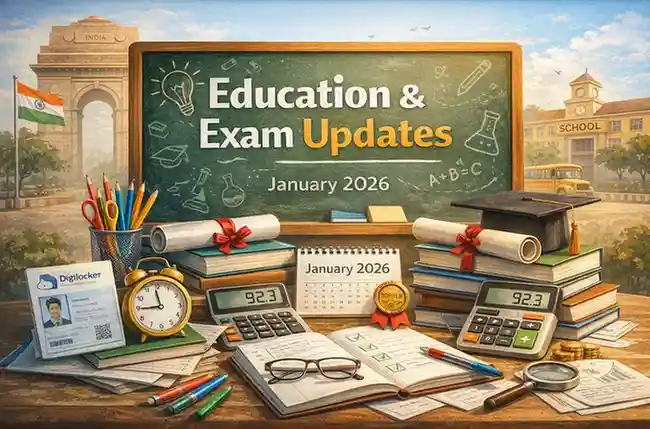
India’s education system is undergoing a quiet but meaningful transformation in 2026, shaped by policy reforms, changing exam patterns, rapid digital adoption, and evolving expectations from students and employers alike. From classrooms in rural districts to elite urban institutions, the way learning is delivered, assessed, and valued is shifting steadily. Education in India is no longer limited to textbooks and memorisation; it is becoming more flexible, technology-driven, and skill-oriented, reflecting the realities of a fast-changing economy and workforce.
One of the most significant influences on India’s education landscape continues to be the National Education Policy (NEP), which is gradually moving from vision to implementation. Schools across states are adapting to new curricular structures that emphasise conceptual understanding, critical thinking, and multidisciplinary learning. The rigid separation between science, commerce, and the arts is slowly blurring, allowing students to explore diverse subjects based on interest rather than social pressure. This change is especially visible at the secondary level, where flexibility in subject choices is helping students feel less boxed into early career decisions.
Examinations, long considered the most stressful aspect of Indian education, are also witnessing noticeable reform. Boards and education authorities are increasingly shifting focus from one-time, high-stakes exams to more continuous and competency-based assessment models. Internal assessments, project work, and application-based questions are gaining importance, reducing the overdependence on rote memorisation. While traditional board exams still exist, their structure is slowly evolving to test understanding rather than repetition, a change welcomed by educators but still challenging for students accustomed to old patterns.
Competitive exams remain a central part of India’s academic ecosystem, but even here, change is underway. National-level entrance exams are being streamlined to reduce redundancy and pressure on students who previously had to prepare for multiple tests with overlapping syllabi. Digital exam infrastructure has improved, making online testing more reliable and accessible. However, concerns around fairness, exam stress, and unequal access to coaching resources persist, highlighting the need for more inclusive solutions that do not disadvantage students from rural or economically weaker backgrounds.
Higher education in India is also in a phase of recalibration. Universities and colleges are increasingly focusing on employability alongside academic excellence. New-age courses in artificial intelligence, data science, cybersecurity, climate studies, and digital marketing are becoming mainstream rather than niche. At the same time, traditional degrees are being restructured to include internships, research projects, and industry exposure. This shift reflects a growing realisation that degrees alone are no longer enough; practical skills and adaptability are just as critical in today’s job market.
Digital learning has firmly established itself as a permanent pillar of India’s education system. What began as an emergency response during earlier years has now evolved into a blended learning model that combines online and offline education. Schools, colleges, and coaching institutes are using digital platforms for recorded lectures, assessments, doubt-solving, and personalised learning paths. Government-backed platforms and private EdTech players alike are expanding their reach, making quality educational content available to students beyond metropolitan cities. While digital education has improved accessibility, it has also raised questions about screen fatigue, data privacy, and the digital divide that still affects many households.
Another important trend shaping education in 2026 is the growing emphasis on skill-based learning. There is increasing awareness among students and parents that traditional academic success does not always translate into career readiness. Skill development programs, vocational training, and certification-based learning are gaining popularity, especially among young adults seeking practical, job-oriented pathways. Government initiatives, industry partnerships, and online platforms are working together to bridge the gap between education and employment, though scaling these efforts remains an ongoing challenge.
School education is also seeing renewed attention to foundational learning. Early childhood education and primary schooling are being recognised as critical stages that influence long-term academic outcomes. Efforts are being made to improve teacher training, learning materials, and classroom engagement at the grassroots level. Language learning, numeracy skills, and emotional development are being prioritised to ensure that students build strong fundamentals before progressing to higher levels of education. These changes may not deliver instant results, but they are essential for sustainable improvement.
Students’ mental health and well-being have emerged as a crucial conversation in the education space. Academic pressure, exam anxiety, and uncertainty about careers continue to affect young minds across the country. Educational institutions are slowly acknowledging this reality by introducing counselling services, life-skills education, and awareness programs. While progress is uneven, the growing recognition of mental health as part of academic success marks an important cultural shift in how education is viewed in India.
Exams related to government jobs and public sector recruitment also continue to attract massive participation, reflecting the demand for stable employment. Recruitment bodies are working toward greater transparency and efficiency in exam scheduling and result declaration, though delays and legal challenges still arise. The competition remains intense, and preparation for these exams often spans years, underscoring the need for broader employment opportunities beyond traditional pathways.
For parents, the education landscape in 2026 can feel both hopeful and overwhelming. On one hand, there are more choices than ever before, ranging from flexible curricula to global learning opportunities. On the other hand, navigating these options requires awareness, digital literacy, and financial planning. Parental expectations are also evolving, with a gradual shift away from fixed career definitions toward a more open-minded approach to children’s interests and strengths.