Economic Survey & Budget Focus — India (2026)
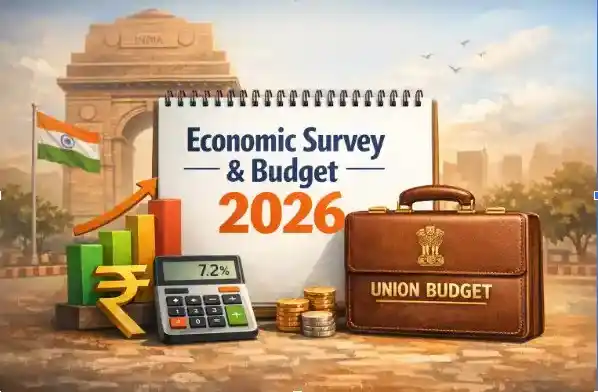
As India prepares for the Union Budget 2026, all eyes are on the Economic Survey 2025-26 — a comprehensive review of how the economy performed over the past year and what to expect in the year ahead. Presented in Parliament on 29 January 2026, this year’s Economic Survey sets the tone for the Budget scheduled on 1 February 2026 and highlights India’s priorities in a world of shifting economic dynamics.
In this article, we break down the key messages, major findings, and how they connect with India’s broader budget strategy in clear, reader-friendly language.
What Is the Economic Survey?
Before we dive into the details, here’s a quick primer on what this document means:
- The Economic Survey is an annual report prepared by the Ministry of Finance’s Economic Division, under the guidance of the Chief Economic Adviser (CEA).
- It offers a big-picture review of India’s economic performance, data trends from the past year, and analytical insights ahead of the Union Budget.
- Policymakers, economists, businesses, and citizens watch it closely as it often highlights priorities and challenges that the upcoming budget will address.
- This year, Finance Minister Nirmala Sitharaman presented the Survey to both houses of Parliament a few days before Budget Day giving lawmakers and the public a data-driven economic briefing.
Growth Outlook: Steady and Resilient
One of the Survey’s central updates is its growth projection for India:
- For the current financial year (2025-26), India is estimated to have continued its strong growth trajectory.
- Looking ahead to FY27 (2026-27), the Survey projects GDP growth between 6.8 % and 7.2 %, slightly below last year’s pace of approximately 7.4 % but still impressive compared with global averages.
What’s behind this growth?
- Domestic demand, especially consumer spending, services, and investment, remains a key driver.
- Strong infrastructure expansion and public investment have sustained momentum.
- Despite global headwinds like geopolitical tensions and tightening external demand, India’s economy shows resilience and forward momentum.
In simple terms: India’s economy isn’t booming uncontrollably — but it’s stable, adapting, and keeping its growth engine running even when the world economy faces uncertainties.
Policy Signals & Strategic Priorities
The Economic Survey isn’t just about numbers; it’s also a narrative about what the government believes India’s priorities should be. Some key policy orientations include:
🔹 1. Inflation and Stability
While inflation is expected to rise moderately in the next year, the Survey notes it is likely to stay within manageable limits. Monetary stability and strong supply chains help keep price pressures in check.
🔹 2. Fiscal Discipline Meets Growth
The Survey emphasises the need for continued fiscal discipline. India’s budget goals include:
- Gradually reducing the fiscal deficit, the gap between what the government spends and earns, without stifling growth.
- Sustaining public investment in infrastructure and social services.
- Using reforms such as GST simplification and tax base broadening to improve efficiency and revenue collection.
Such calibration, balancing fiscal prudence with economic expansion, signals that the government isn’t overspending but still keen to support long-term progress.
🔹 3. Global Challenges, Domestic Strength
Global trade uncertainty, supply chain shifts, and geopolitical tensions are acknowledged as risks, but the Survey highlights India’s capacity to absorb these shocks, thanks to:
- Healthy foreign exchange reserves.
- A strong current account position.
- Increasing diversification of exports, especially in services.
This is an important signal: India wants to remain open to global trade while building domestic resilience.
Where Budget 2026 Comes In
The Economic Survey sets the stage for the Union Budget 2026, expected to reflect many of its priorities. Here’s how they connect:
🔸 Growth with Inclusivity
The Survey’s growth numbers provide context for budget projections setting a target that is optimistic yet realistic. The Budget will likely focus on:
- Targeted spending on social sectors, including health, education, and social security.
- Infrastructure and productivity enhancements, such as transportation, urban development, and digital infrastructure.
🔸 Supporting Consumption and Investment
Since domestic demand is driving growth, the Budget is expected to include initiatives that:
- Boost consumer confidence through employment opportunities.
- Incentivise private investment in key sectors, including manufacturing and services.
🔸 Technology, Skills & Regulation
The focus on AI and digital transformation in the Survey suggests the Budget might prioritise:
- R&D incentives and digital adoption programs.
- Skill development schemes to equip India’s workforce for future technologies.
- Regulatory reforms to reduce compliance friction and enhance ease of doing business.