“US Must Be Prudent When Supplying Arms to Taiwan,” Xi Tells Trump
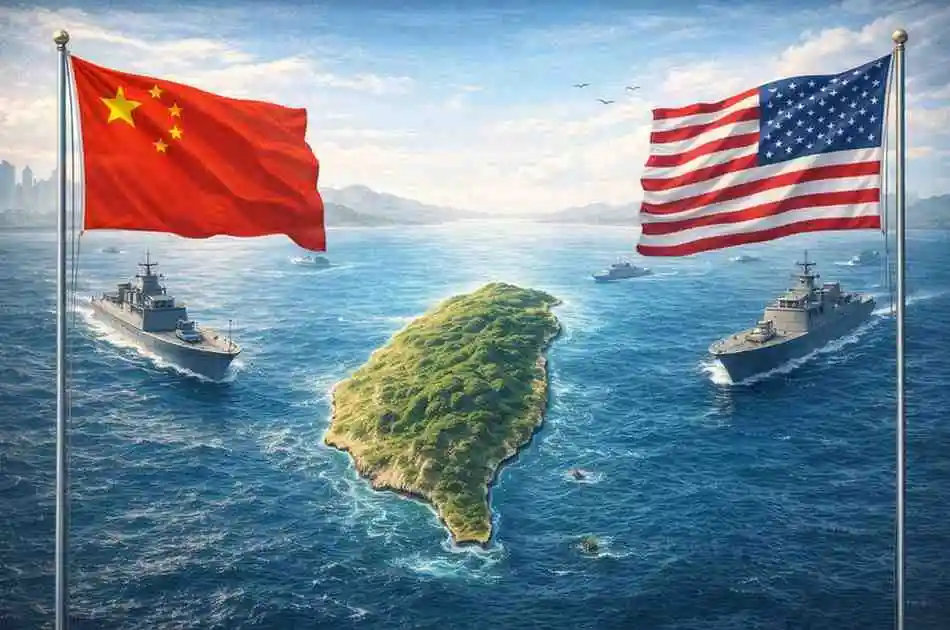
In a carefully worded but unmistakably firm message, Chinese President Xi Jinping has urged former U.S. President Donald Trump to act “prudently” when it comes to supplying arms to Taiwan, highlighting one of the most sensitive fault lines in global geopolitics.
The message, delivered during recent diplomatic communication, reflects China’s deep concern over continued U.S. arms sales to Taiwan, which Beijing views as a direct challenge to its sovereignty. For Washington, however, military support for Taiwan remains a long-standing policy pillar, one that balances deterrence, alliance commitments, and regional stability.
Xi’s warning does not signal immediate confrontation. Instead, it underscores a fragile equilibrium where diplomacy, military posturing, and political messaging must coexist without tipping the region into crisis.
Why Taiwan Remains the World’s Most Dangerous Flashpoint
To understand the gravity of Xi’s statement, one must first understand Taiwan’s unique and precarious status.
China considers Taiwan an inseparable part of its territory, governed temporarily by a separate administration since the Chinese Civil War ended in 1949. Taiwan, meanwhile, operates as a self-governing democracy with its own government, military, and economy — though it is recognized diplomatically by only a handful of countries.
The United States officially acknowledges the “One China” policy but simultaneously maintains unofficial relations with Taiwan, including arms sales under the Taiwan Relations Act. This strategic ambiguity has preserved peace for decades, but it has also created persistent tension.
Any shift in this balance, perceived or real, sends shockwaves through Beijing, Washington, and the wider Indo-Pacific region.
Xi’s Warning: More Than Just Words
President Xi’s call for “prudence” is not accidental language. In diplomatic terms, it signals:
- Disapproval without escalation
- A red line being restated, not crossed
- An attempt to influence future U.S. decisions
Chinese officials have repeatedly argued that U.S. arms supplies embolden pro-independence sentiment in Taiwan, increasing the risk of miscalculation or conflict. From Beijing’s perspective, weapons shipments are not defensive they are political signals.
Xi’s message to Trump, therefore, serves a dual purpose:
to reassert China’s position and to test Washington’s willingness to restrain its actions amid an already volatile global environment.
The U.S. Position: Deterrence, Not Provocation
From Washington’s viewpoint, arms sales to Taiwan are framed as defensive and stabilizing, not provocative. U.S. officials argue that these transfers help Taiwan maintain sufficient self-defense capabilities, thereby discouraging any unilateral attempt to alter the status quo by force.
Successive U.S. administrations, Republican and Democratic alike, have supported this approach, emphasizing that deterrence reduces the likelihood of conflict rather than inviting it.
However, the scale, frequency, and sophistication of recent arms packages have raised alarms in Beijing, particularly as U.S.–China relations have deteriorated on multiple fronts, including technology, trade, cybersecurity, and military activity in the South China Sea.
Trump, Xi, and the Return of Strategic Uncertainty
The reference to Donald Trump adds layer of complexity.
During his presidency, Trump adopted an unpredictable approach to China, combining aggressive trade measures with moments of personal diplomacy with Xi. His administration approved several arms sales to Taiwan while also questioning long-standing alliance frameworks.
Xi’s message appears calibrated for a future where Trump could again play a decisive role in U.S. foreign policy, reminding Washington that Taiwan remains a non-negotiable core interest for Beijing — regardless of who occupies the White House.
For China, consistency matters. For the U.S., flexibility is often seen as a strength. This divergence in strategic culture continues to complicate bilateral relations.
Taiwan’s Perspective: Security Without Provocation
Caught between two superpowers, Taiwan’s leadership has adopted a cautious tone. While welcoming U.S. security support, officials in Taipei consistently emphasize that they are not seeking confrontation or a formal declaration of independence.
Instead, Taiwan focuses on:
- Strengthening asymmetric defense capabilities
- Investing in civil resilience
- Maintaining international economic ties
The island’s leaders understand that symbolism matters as much as military hardware. Even routine arms deals can be interpreted as political statements — something Taiwan must carefully manage to avoid triggering escalation.
Regional Impact: Asia Watches Closely
Xi’s warning reverberates far beyond Beijing and Washington.
Countries across East and Southeast Asia, including Japan, South Korea, the Philippines, and Australia, are watching developments closely. Any instability in the Taiwan Strait would disrupt global supply chains, energy flows, and maritime trade routes critical to the world economy.
Japan, in particular, has signaled that peace in the Taiwan Strait is essential to its national security, while ASEAN nations continue to call for restraint and dialogue.
The issue is no longer bilateral. It is regional and global.
Military Signaling and Strategic Messaging
China has responded to arms sales in the past with:
- Large-scale military drills near Taiwan
- Increased air and naval patrols
- Strong diplomatic protests
Yet analysts note that Beijing has so far avoided irreversible steps, suggesting a desire to apply pressure without provoking direct confrontation.
Similarly, the United States continues freedom-of-navigation operations and regional military cooperation while reiterating that it does not support Taiwan independence.
This choreography of restraint is deliberate and fragile.