
Russian Attacks on Ukraine’s Energy Infrastructure ‘Particularly Depraved,’ Says UK Prime Minister Keir Starmer
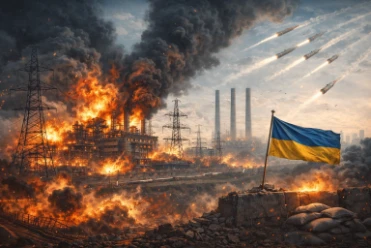
As winter tightens its grip across Eastern Europe, renewed Russian attacks on Ukraine’s energy infrastructure have drawn sharp international condemnation. UK Prime Minister Keir Starmer has described the strikes as “particularly depraved,” accusing Moscow of deliberately targeting civilian life by attacking power stations, heating systems, and electricity networks at a time when millions of Ukrainians depend on them for survival.
The remarks come amid a fresh wave of missile and drone strikes that have damaged key energy facilities across Ukraine, causing widespread power outages and raising fears of a deepening humanitarian crisis. While energy infrastructure has been a recurring target since the war began, the timing and intensity of the latest attacks have reignited debate over Russia’s strategy and the international response.
A Calculated Strike on Civilian Life
Energy systems are the backbone of daily life, powering homes, hospitals, water supplies, and communication networks. By targeting these systems, critics argue, Russia is not merely striking military or industrial targets but aiming to break civilian resilience.
Speaking after high-level consultations with European allies, Starmer said the attacks showed “a deliberate and chilling disregard for human suffering,” adding that targeting power and heating facilities during colder months crossed a moral line.
“These are not abstract targets,” he said. “They are homes, hospitals, and communities. To deliberately plunge civilians into darkness and cold is particularly depraved.”
Ukrainian officials echoed this view, stating that the strikes were designed to create prolonged blackouts and overwhelm emergency repair crews. In several regions, residents were forced to rely on generators, wood-burning stoves, and emergency shelters as temperatures dropped.
Ukraine’s Energy System Under Sustained Pressure
Since the early stages of the conflict, Ukraine’s energy grid has been repeatedly damaged. Power plants, substations, and transmission lines have all been hit, requiring constant repair and rerouting to keep electricity flowing.
What makes the latest attacks especially concerning, analysts say, is their precision and persistence. Rather than one-off strikes, the assaults appear aimed at systematically degrading Ukraine’s ability to restore power quickly.
Engineers and emergency workers have worked around the clock to stabilize the grid, often repairing facilities under the threat of further attacks. Ukrainian energy officials warn that while the system remains functional, its margin for resilience is shrinking.
Hospitals and critical services are operating on backup systems in some areas, while rural communities face longer outages. Schools have shifted to hybrid or remote learning, and businesses report mounting losses as production slows or stops altogether.
Starmer’s Strongest Language Yet
Keir Starmer’s remarks mark one of the strongest condemnations of Russia’s tactics by a UK leader since he took office. While Britain has consistently supported Ukraine with military aid, training, and humanitarian assistance, Starmer’s language signals a renewed effort to frame the conflict in moral as well as strategic terms.
UK officials say the prime minister’s words reflect growing concern that attacks on civilian infrastructure could intensify as the war drags on, particularly if diplomatic efforts stall.
Behind the scenes, London is pushing for tighter coordination among allies to protect Ukraine’s energy systems, including air-defence support, technical assistance, and funding for rapid repairs.
International Reaction: Growing Alarm
The UK is not alone in its assessment. Several European leaders and international organizations have voiced alarm over the targeting of energy infrastructure, warning that such attacks could violate international humanitarian norms.
European Union officials have called for increased support to help Ukraine winter-proof its energy grid, while humanitarian groups warn that prolonged outages could trigger secondary crises — including water shortages, health emergencies, and population displacement.
The United Nations has repeatedly stressed that infrastructure essential to civilian survival should be protected, regardless of the conflict’s military dynamics. Aid agencies on the ground report rising demand for heating equipment, fuel, and emergency shelter as communities brace for further disruptions.