Healthcare & Public Welfare in India: Key Developments Shaping 2026
Public welfare schemes related to healthcare are also seeing wider adoption. Health insurance coverage for economically weaker sections has expanded, helping families manage medical expenses without falling into debt. These schemes aim to reduce out-of-pocket spending, which has historically been one of the biggest challenges for Indian households during medical emergencies.
Mental health, once a neglected area, is finally receiving attention. Increased awareness, workplace discussions, and community-level initiatives are slowly breaking the stigma associated with mental illness. Counselling services, helplines, and wellness programs are being integrated into educational institutions and workplaces, signalling a more holistic approach to public health.
Nutrition and maternal healthcare remain critical focus areas under public welfare programs. Efforts to improve child nutrition, maternal care, and vaccination coverage are helping reduce long-term health risks. These initiatives not only improve individual well-being but also contribute to healthier future generations, strengthening the country’s overall human capital.
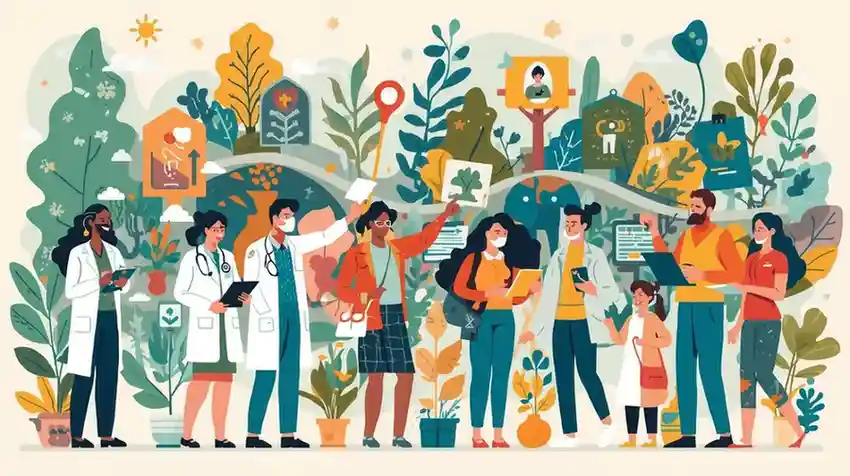
Healthcare workers continue to be the backbone of the system. Training programs, skill development initiatives, and better working conditions are being introduced to support doctors, nurses, and frontline health workers. Their role in community health awareness and disease prevention has become more prominent, especially in rural outreach programs.
Despite these advancements, challenges remain. Unequal access to quality healthcare, rising treatment costs in private facilities, and shortages of specialists in rural areas continue to demand attention. Policymakers and healthcare leaders acknowledge that sustained investment and long-term planning are essential to bridge these gaps.
Looking ahead, India’s healthcare and public welfare strategy appears focused on inclusivity, technology-driven solutions, and community participation. The goal is not just to treat illness but to create a healthier population that can actively contribute to the nation’s growth. As reforms continue to evolve, healthcare is increasingly being viewed not as an expense, but as a vital investment in India’s future.
Healthcare and public welfare have become central priorities in India’s development journey, especially as the country balances economic growth with social responsibility. In 2026, India’s healthcare ecosystem reflects a mix of progress, ongoing challenges, and renewed focus on accessibility, affordability, and prevention. From government-backed welfare schemes to digital health initiatives, the emphasis is increasingly on reaching citizens at the grassroots level.
One of the most visible shifts in India’s healthcare landscape is the growing focus on preventive care rather than reactive treatment. Awareness campaigns around nutrition, lifestyle diseases, mental health, and early diagnosis are gaining momentum. Health experts believe that reducing long-term healthcare costs depends largely on preventing illnesses before they become severe, and public messaging is now aligning with this idea.
Public hospitals continue to play a crucial role in providing affordable care to millions of Indians. Investments in infrastructure, medical equipment, and staffing are helping improve service delivery, particularly in district hospitals and rural health centres. While urban areas already have access to advanced facilities, the real transformation is being seen in semi-urban and rural regions where access to basic healthcare was once limited.
Another important development is the increasing use of digital health solutions. Telemedicine, online consultations, digital prescriptions, and electronic health records are making healthcare more accessible, especially for people living in remote areas. Patients no longer need to travel long distances for routine consultations, saving both time and money. This digital shift has also helped reduce overcrowding in hospitals.
Public welfare schemes related to healthcare are also seeing wider adoption. Health insurance coverage for economically weaker sections has expanded, helping families manage medical expenses without falling into debt. These schemes aim to reduce out-of-pocket spending, which has historically been one of the biggest challenges for Indian households during medical emergencies.
Mental health, once a neglected area, is finally receiving attention. Increased awareness, workplace discussions, and community-level initiatives are slowly breaking the stigma associated with mental illness. Counselling services, helplines, and wellness programs are being integrated into educational institutions and workplaces, signalling a more holistic approach to public health.
Nutrition and maternal healthcare remain critical focus areas under public welfare programs. Efforts to improve child nutrition, maternal care, and vaccination coverage are helping reduce long-term health risks. These initiatives not only improve individual well-being but also contribute to healthier future generations, strengthening the country’s overall human capital.
Healthcare workers continue to be the backbone of the system. Training programs, skill development initiatives, and better working conditions are being introduced to support doctors, nurses, and frontline health workers. Their role in community health awareness and disease prevention has become more prominent, especially in rural outreach programs.
Despite these advancements, challenges remain. Unequal access to quality healthcare, rising treatment costs in private facilities, and shortages of specialists in rural areas continue to demand attention. Policymakers and healthcare leaders acknowledge that sustained investment and long-term planning are essential to bridge these gaps.
Looking ahead, India’s healthcare and public welfare strategy appears focused on inclusivity, technology-driven solutions, and community participation. The goal is not just to treat illness but to create a healthier population that can actively contribute to the nation’s growth. As reforms continue to evolve, healthcare is increasingly being viewed not as an expense, but as a vital investment in India’s future.