India’s Infrastructure & Development: Driving Growth and Connectivity in 2026
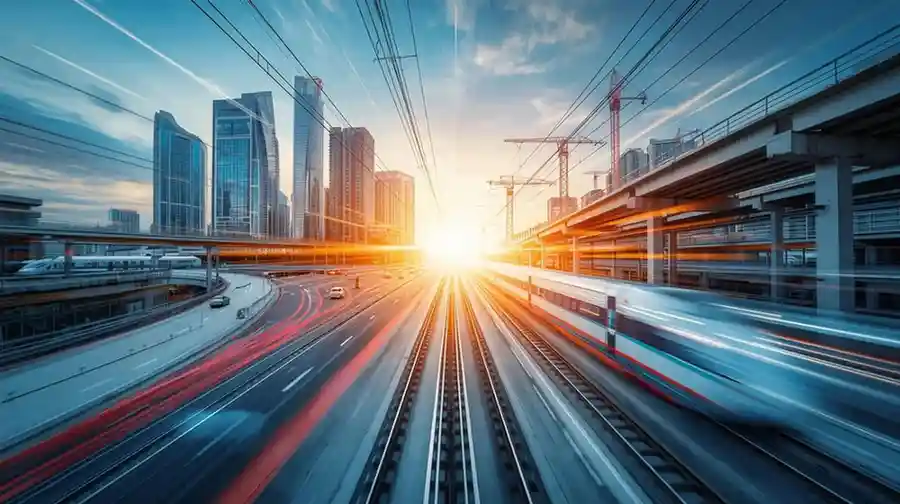
India’s push to strengthen its infrastructure ecosystem continues with momentum in early 2026, as government bodies, states, and private players accelerate projects that span transportation networks, urban connectivity, and strategic economic zones. The Economic Survey 2026 highlights infrastructure as a core driver of economic growth, noting that roads, railways, ports, aviation, and digital connectivity will collectively fuel the nation’s development trajectory in the years ahead. This coordinated approach is backed by a blend of public investment and robust public-private partnerships (PPPs), recognising that government funding alone cannot meet the scale and speed required for modern infrastructure delivery.
On the ground, local development plans are taking shape in cities like Thiruvananthapuram, where municipal leaders have unveiled long-term blueprints that prioritise metro rail expansion, healthcare facilities like AIIMS, and an upgraded port to boost economic activity and improve commuter experiences. Meanwhile, in western India, Titagarh Rail Systems has signed a strategic agreement with ABB India to manufacture key propulsion systems for metro rail projects, underscoring India’s growing ambition to localise advanced railway technology and support the broader goals of “Make in India” and “Atmanirbhar Bharat” in urban transit infrastructure.
State governments are also actively advancing infrastructure pipelines. In Maharashtra, the cabinet recently approved a series of significant projects, including metro expansions and urban development schemes designed to enhance connectivity and stimulate economic growth across the state. These efforts reflect a broader trend of decentralised development planning that empowers regional governments to tailor infrastructure priorities to local needs while aligning with national objectives.
At the national level, initiatives aimed at improving last-mile rural connectivity are showing measurable progress. Programs such as the Pradhan Mantri Gram Sadak Yojana (PMGSY) have connected nearly all eligible rural habitations, and further expansions are planned to link tens of thousands of additional villages with all-weather roads by the end of the decade. This expansion not only enhances mobility for rural communities but also supports livelihoods by connecting producers to markets and services more efficiently.
Major transport corridors continue to transform how people and goods move across the country. For example, ongoing expressway projects like the planned Surat–Chennai Expressway promise to transform long-distance travel across six states by reducing travel time dramatically and easing freight movement across western and southern India. Similarly, metro rail expansions in metropolitan hubs, including lines such as the Pink Line in Mumbai Metro, aim to relieve congestion, improve urban mobility, and provide reliable public transit solutions to millions of daily commuters.
International partnerships are also supporting India’s infrastructure ambitions. Recent approvals from institutions such as the World Bank will help enhance access to markets, jobs, and services in states like Assam, with projects focusing on rural connectivity, education services, and economic integration. Moreover, global forums like Davos 2026 have seen announcements of large-scale investment pipelines — including USD 10 billion in digital, industrial, and logistics infrastructure commitments in Andhra Pradesh — signalling strong overseas and domestic investor confidence in India’s infrastructure potential.
Beyond transport and connectivity, infrastructure development in India is increasingly intersecting with industrial growth and technological advancement. Investments in data centres, logistics parks, and smart city frameworks are positioning cities like Dholera Smart City in Gujarat as emerging hubs of economic activity, combining expressway access, planned industrial zones, and future airports to attract business and innovation. Additionally, large-scale manufacturing and medical technology facilities, such as a ₹587-crore medical device park in Uttar Pradesh’s Yamuna Expressway region,n are creating jobs while broadening the base of industrial infrastructure across the country.
Despite these successes, challenges like land acquisition and project delays remain significant obstacles, often slowing the pace of implementation. Government reviews emphasise the need for clear policies and streamlined processes to overcome such barriers and ensure the timely completion of infrastructure projects nationwide.
Looking ahead, India’s infrastructure landscape in 2026 reflects a multi-dimensional growth strategy, one that balances traditional connectivity projects with emerging sectors like digital infrastructure, urban development, and industrial expansion. This holistic approach is not only improving the physical fabric of the nation but also laying a foundation for sustainable economic growth and inclusive development in the years to come.
State governments are also actively advancing infrastructure pipelines. In Maharashtra, the cabinet recently approved a series of significant projects, including metro expansions and urban development schemes designed to enhance connectivity and stimulate economic growth across the state. These efforts reflect a broader trend of decentralised development planning that empowers regional governments to tailor infrastructure priorities to local needs while aligning with national objectives.
At the national level, initiatives aimed at improving last-mile rural connectivity are showing measurable progress. Programs such as the Pradhan Mantri Gram Sadak Yojana (PMGSY) have connected nearly all eligible rural habitations, and further expansions are planned to link tens of thousands of additional villages with all-weather roads by the end of the decade. This expansion not only enhances mobility for rural communities but also supports livelihoods by connecting producers to markets and services more efficiently.
Major transport corridors continue to transform how people and goods move across the country. For example, ongoing expressway projects like the planned Surat–Chennai Expressway promise to transform long-distance travel across six states by reducing travel time dramatically and easing freight movement across western and southern India. Similarly, metro rail expansions in metropolitan hubs, including lines such as the Pink Line in Mumbai Metro, aim to relieve congestion, improve urban mobility, and provide reliable public transit solutions to millions of daily commuters.
International partnerships are also supporting India’s infrastructure ambitions. Recent approvals from institutions such as the World Bank will help enhance access to markets, jobs, and services in states like Assam, with projects focusing on rural connectivity, education services, and economic integration. Moreover, global forums like Davos 2026 have seen announcements of large-scale investment pipelines — including USD 10 billion in digital, industrial, and logistics infrastructure commitments in Andhra Pradesh — signalling strong overseas and domestic investor confidence in India’s infrastructure potential.
Beyond transport and connectivity, infrastructure development in India is increasingly intersecting with industrial growth and technological advancement. Investments in data centres, logistics parks, and smart city frameworks are positioning cities like Dholera Smart City in Gujarat as emerging hubs of economic activity, combining expressway access, planned industrial zones, and future airports to attract business and innovation. Additionally, large-scale manufacturing and medical technology facilities, such as a ₹587-crore medical device park in Uttar Pradesh’s Yamuna Expressway region,n are creating jobs while broadening the base of industrial infrastructure across the country.
Despite these successes, challenges like land acquisition and project delays remain significant obstacles, often slowing the pace of implementation. Government reviews emphasise the need for clear policies and streamlined processes to overcome such barriers and ensure the timely completion of infrastructure projects nationwide.
Looking ahead, India’s infrastructure landscape in 2026 reflects a multi-dimensional growth strategy, one that balances traditional connectivity projects with emerging sectors like digital infrastructure, urban development, and industrial expansion. This holistic approach is not only improving the physical fabric of the nation but also laying a foundation for sustainable economic growth and inclusive development in the years to come.
India’s push to strengthen its infrastructure ecosystem continues with momentum in early 2026, as government bodies, states, and private players accelerate projects that span transportation networks, urban connectivity, and strategic economic zones. The Economic Survey 2026 highlights infrastructure as a core driver of economic growth, noting that roads, railways, ports, aviation, and digital connectivity will collectively fuel the nation’s development trajectory in the years ahead. This coordinated approach is backed by a blend of public investment and robust public-private partnerships (PPPs), recognising that government funding alone cannot meet the scale and speed required for modern infrastructure delivery.
On the ground, local development plans are taking shape in cities like Thiruvananthapuram, where municipal leaders have unveiled long-term blueprints that prioritise metro rail expansion, healthcare facilities like AIIMS, and an upgraded port to boost economic activity and improve commuter experiences. Meanwhile, in western India, Titagarh Rail Systems has signed a strategic agreement with ABB India to manufacture key propulsion systems for metro rail projects, underscoring India’s growing ambition to localise advanced railway technology and support the broader goals of “Make in India” and “Atmanirbhar Bharat” in urban transit infrastructure.
State governments are also actively advancing infrastructure pipelines. In Maharashtra, the cabinet recently approved a series of significant projects, including metro expansions and urban development schemes designed to enhance connectivity and stimulate economic growth across the state. These efforts reflect a broader trend of decentralised development planning that empowers regional governments to tailor infrastructure priorities to local needs while aligning with national objectives.
At the national level, initiatives aimed at improving last-mile rural connectivity are showing measurable progress. Programs such as the Pradhan Mantri Gram Sadak Yojana (PMGSY) have connected nearly all eligible rural habitations, and further expansions are planned to link tens of thousands of additional villages with all-weather roads by the end of the decade. This expansion not only enhances mobility for rural communities but also supports livelihoods by connecting producers to markets and services more efficiently.
Major transport corridors continue to transform how people and goods move across the country. For example, ongoing expressway projects like the planned Surat–Chennai Expressway promise to transform long-distance travel across six states by reducing travel time dramatically and easing freight movement across western and southern India. Similarly, metro rail expansions in metropolitan hubs, including lines such as the Pink Line in Mumbai Metro, aim to relieve congestion, improve urban mobility, and provide reliable public transit solutions to millions of daily commuters.
International partnerships are also supporting India’s infrastructure ambitions. Recent approvals from institutions such as the World Bank will help enhance access to markets, jobs, and services in states like Assam, with projects focusing on rural connectivity, education services, and economic integration. Moreover, global forums like Davos 2026 have seen announcements of large-scale investment pipelines — including USD 10 billion in digital, industrial, and logistics infrastructure commitments in Andhra Pradesh — signalling strong overseas and domestic investor confidence in India’s infrastructure potential.
Beyond transport and connectivity, infrastructure development in India is increasingly intersecting with industrial growth and technological advancement. Investments in data centres, logistics parks, and smart city frameworks are positioning cities like Dholera Smart City in Gujarat as emerging hubs of economic activity, combining expressway access, planned industrial zones, and future airports to attract business and innovation. Additionally, large-scale manufacturing and medical technology facilities, such as a ₹587-crore medical device park in Uttar Pradesh’s Yamuna Expressway region,n are creating jobs while broadening the base of industrial infrastructure across the country.
Despite these successes, challenges like land acquisition and project delays remain significant obstacles, often slowing the pace of implementation. Government reviews emphasise the need for clear policies and streamlined processes to overcome such barriers and ensure the timely completion of infrastructure projects nationwide.
Looking ahead, India’s infrastructure landscape in 2026 reflects a multi-dimensional growth strategy, one that balances traditional connectivity projects with emerging sectors like digital infrastructure, urban development, and industrial expansion. This holistic approach is not only improving the physical fabric of the nation but also laying a foundation for sustainable economic growth and inclusive development in the years to come.