
Gen Z Toppled an Autocrat — but the Old Guard Is Tipped to Win Bangladesh’s Vote
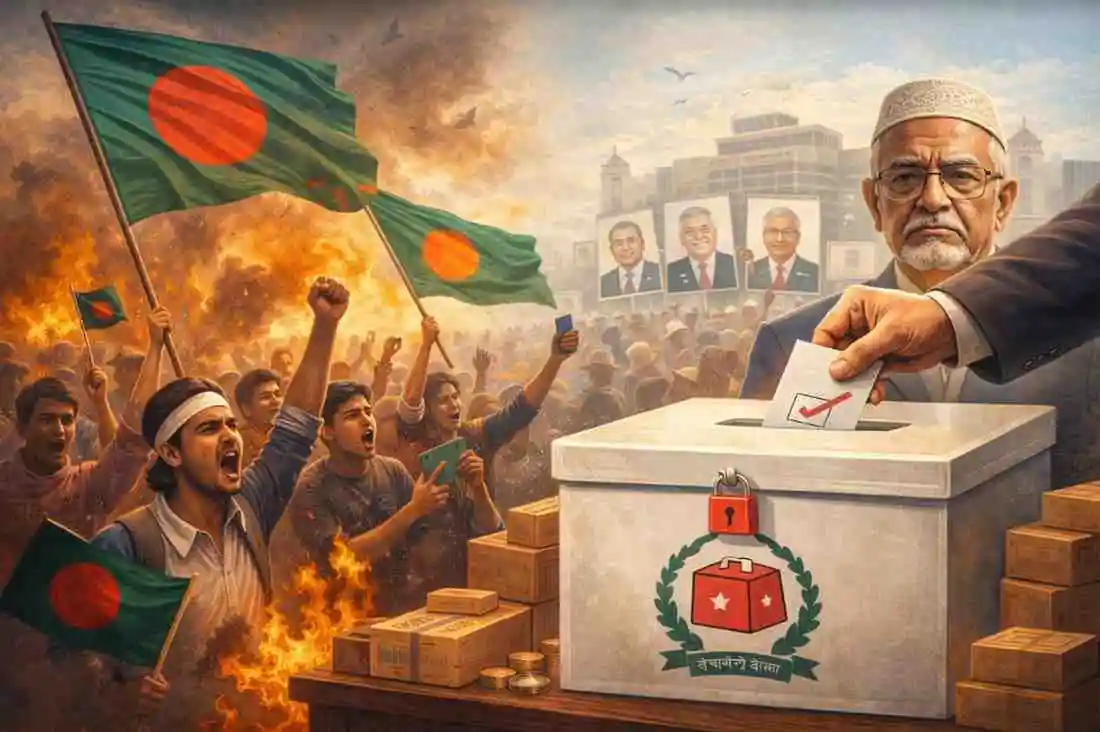
When Bangladesh’s streets filled with chanting students, waving flags and defiant slogans, the message felt unmistakable: a generation had finally had enough. It was Gen Z digitally fluent, politically restless, and deep frustration that pushed back against years of authoritarian drift and helped bring down one of South Asia’s most entrenched power structures.
Yet, as Bangladesh heads toward a critical national vote, a paradox has emerged. The youth movement that cracked open the system may not be the one to control it. Despite the dramatic fall of an autocrat, political analysts, diplomats, and even student leaders themselves acknowledge a sobering reality: the old political guard still holds the advantage.
The coming election is shaping up to be less a clean break from the past and more a complex contest between revolutionary energy and institutional power.
How Gen Z Reignited Bangladesh’s Political Pulse
Bangladesh has long been governed through a tightly controlled political ecosystem. Opposition parties were weakened, dissent was often silenced, and elections increasingly felt like foregone conclusions. For years, this reality bred quiet resignation until young people decided silence was no longer an option.
A Movement Born on Campuses and Screens
The uprising did not begin with political parties. It began with students, many of whom had grown up knowing only one style of governance. Rising unemployment, inflation, corruption scandals, and shrinking freedoms created a combustible mix. Social media amplified anger into action, allowing protests to spread faster than authorities could suppress them.
Gen Z organisers relied on:
- Encrypted messaging apps
- Decentralised leadership
- Viral videos and livestreams
- Issue-based demands rather than party loyalty
This made the movement difficult to control and impossible to ignore.
What ultimately toppled the autocrat was not just numbers, but moral legitimacy. When students faced arrests, internet shutdowns, and violence, public sympathy tilted decisively in their favour. Civil society, professionals, and even sections of the middle class quietly backed the protests.
The Fall of an Autocrat — and the Limits of Protest Power
The regime’s collapse was historic. For the first time in years, Bangladesh experienced a genuine rupture in its political continuity. But revolutions, as history shows, rarely end neatly.
Winning the Streets vs Winning the State
Gen Z succeeded in doing what traditional opposition parties could not: break the aura of inevitability surrounding authoritarian rule. But removing a leader is not the same as dismantling a system.
Key institutions — including:
- The bureaucracy
- Security apparatus
- Election machinery
- Local political networks
remain dominated by veteran actors who have navigated Bangladesh’s power structure for decades.
While young activists excel at mobilisation, these institutions reward experience, alliances, and long-term organisational muscle — areas where the old guard still dominates.
Why the Old Guard Is Still Favoured to Win
Despite the youth-led upheaval, most forecasts suggest that established political forces — whether rebranded incumbents or familiar opposition elites — are likely to emerge victorious.
1. Electoral Machinery Still Favours Experience
Elections in Bangladesh are not won on passion alone. They require:
- Booth-level organisation
- Voter transport networks
- Deep local patronage systems
Veteran parties have spent decades building these structures. Gen Z-driven groups, by contrast, remain loosely organised and ideologically diverse, making it difficult to convert protest momentum into votes.
2. Youth Movements Are Not Unified Politically
While students rallied around shared grievances, they diverged sharply on solutions. Some want reform from within existing parties. Others demand entirely new political formations. This fragmentation weakens their electoral impact.
There is also a generational gap: many older voters fear instability and prefer familiar political brands, even if imperfect, over untested alternatives.
3. Fear of Chaos Is a Powerful Campaign Tool
Establishment figures have framed themselves as guarantors of stability, warning that radical change could hurt the economy, deter investors, or invite unrest. In a country where millions depend on fragile livelihoods, this message resonates.
A Nation Caught Between Hope and Habit
Bangladesh’s political mood today is conflicted. There is pride in what young people achieved — and anxiety about what comes next.
The Youth Perspective
Many Gen Z activists are realistic, not naïve. They know electoral victory may be out of reach for now. But they also believe something irreversible has happened.
As one student organiser put it:
“We may not win this election, but they can never rule the same way again.”
That sentiment reflects a broader shift. Fear has weakened. Political awareness has grown. The myth of untouchable power has been shattered.
The Establishment’s Dilemma
For traditional parties, the youth uprising is both a warning and an opportunity. Ignoring Gen Z risks renewed unrest. Co-opting their language without real reform risks cynicism.
Some parties are already attempting to rebrand — talking about transparency, digital governance, and youth employment — but trust remains fragile.
What This Election Really Represents
This vote is not just about who forms the next government. It is about whether Bangladesh’s political system can evolve without collapsing.
Three Possible Outcomes
- Old Guard Wins, But with Constraints
The most likely scenario. Power returns to experienced hands, but under greater public scrutiny and pressure to reform.
- A Hybrid Transition
Established parties govern while incorporating youth leaders, reform agendas, and limited institutional changes.
- Delayed Youth Breakthrough
Even if Gen Z loses now, their influence may shape future elections, parties, and policies over the next decade.