
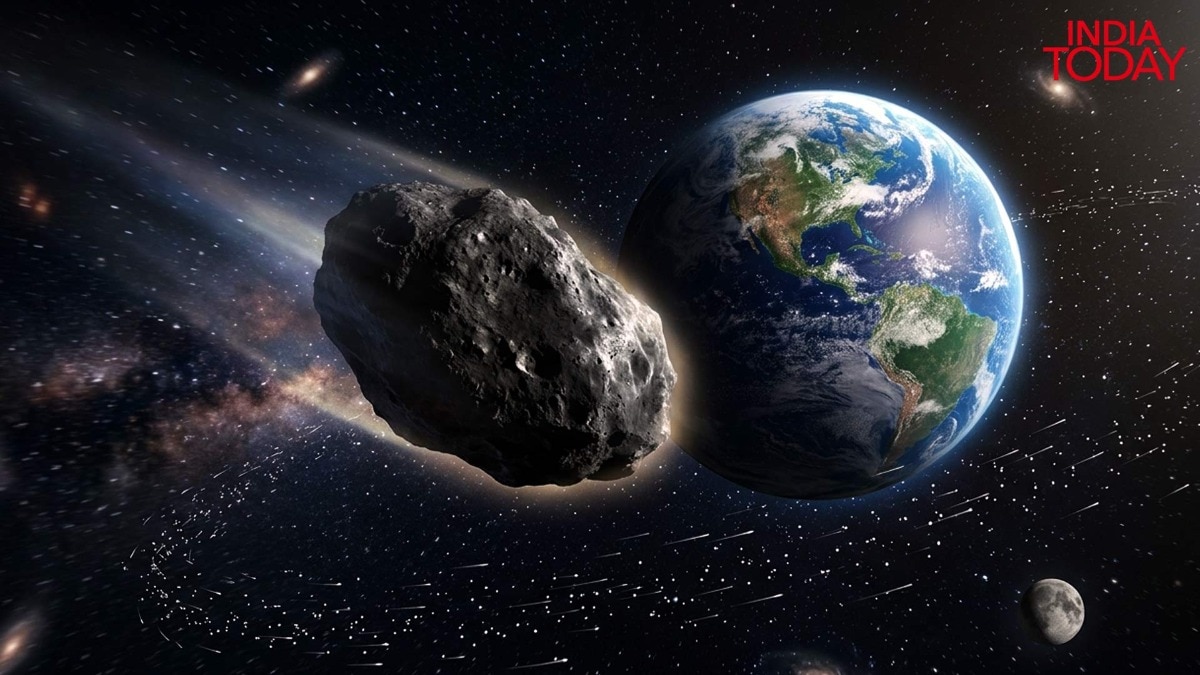
Asteroid the size of a cricket pitch will fly past Earth on Monday. Are we at risk?
# Asteroid the Size of a Cricket Pitch to Fly Past Earth: What You Need to Know About the Close Encounter
On May 18, 2026, Earth will experience a remarkable celestial event as a small asteroid named 2026 JH2 makes its closest approach to our planet. With a size comparable to a cricket pitch, this asteroid will pass at a distance that is closer than the Moon. As excitement builds over this spectacular close encounter, many are left wondering: Are we at risk from this asteroid? In this article, we will delve into the specifics of 2026 JH2, the implications of its approach, and what to expect during this cosmic event.
## Understanding Asteroid 2026 JH2
Asteroid 2026 JH2 is a space rock that has garnered attention due to its proximity to Earth. Measuring approximately 100 meters in width, it is similar in size to a standard cricket pitch, which typically spans 150 meters in length. Discovered in 2026, this asteroid is classified as a Near-Earth Object (NEO), a category that includes asteroids and comets that have orbits bringing them close to our planet.
The Path of 2026 JH2
The trajectory of 2026 JH2 has been meticulously tracked by astronomers and space agencies worldwide. Its orbit indicates that it will come within about 300,000 kilometers of Earth—less than the average distance from our planet to the Moon, which is approximately 384,400 kilometers. While this may sound alarmingly close, it is essential to understand that many NEOs frequently pass by Earth at much closer distances.
Is There Any Risk?
One of the primary concerns when an asteroid approaches Earth is the potential risk it poses. Fortunately, astronomers assure the public that 2026 JH2 is not expected to collide with our planet. NASA's Near-Earth Object Observations program actively monitors the paths of such asteroids, and 2026 JH2 has been classified as a "no risk" object.
The assessment of risk involves analyzing the asteroid's size, speed, and trajectory. With 2026 JH2's current path, there is no indication of any future collision with Earth. However, scientists continue to study its orbit and will provide updates as the date approaches.
## The Science Behind Asteroids
Asteroids like 2026 JH2 offer valuable insights into the early solar system. Formed billions of years ago from leftover materials during the formation of planets, these celestial bodies can help scientists understand the building blocks of our solar system. By studying their composition, researchers can gain information about the conditions that existed during the solar system's infancy.
How Are Asteroids Monitored?
Asteroids are monitored through various methods, including ground-based telescopes and space missions. Astronomers use radar and optical observations to track their movements and predict their orbits accurately. The data collected helps establish a comprehensive catalog of NEOs, which is crucial for assessing potential threats to Earth.
The Role of Space Agencies
Numerous space agencies, including NASA and the European Space Agency (ESA), play a vital role in monitoring asteroids. NASA's Planetary Defense Coordination Office (PDCO) is specifically tasked with detecting and tracking NEOs. The agency utilizes advanced technologies, such as the Near-Earth Object Wide-field Infrared Survey Explorer (NEOWISE), to identify potentially hazardous asteroids.
In addition to tracking, these agencies conduct research and develop strategies for planetary defense. This includes potential mitigation techniques should a future asteroid pose a significant threat to Earth.
## What Can We Expect on May 18, 2026?
The flyby of 2026 JH2 on May 18, 2026, offers an exciting opportunity for both scientists and space enthusiasts alike. While there is no risk associated with this asteroid, its close approach will provide an excellent chance for observational studies. Here’s what to expect:
Amateur Astronomy Events
Astronomers and astronomy clubs around the world are likely to organize events to observe the flyby of 2026 JH2. Telescopes and binoculars will be set up in various locations to help enthusiasts catch a glimpse of the asteroid as it streaks past Earth.
Educational Initiatives
Educational institutions may incorporate the flyby into their science curricula, helping students learn about asteroids, their significance, and the importance of monitoring space objects. This event can serve as a springboard for discussions about space exploration and the nature of our solar system.
Live Streams and Coverage
Expect extensive media coverage of the flyby, with many organizations providing live streams of the event. Social media platforms will likely be abuzz with real-time updates, images captured by astronomers, and educational content about 2026 JH2 and asteroids in general.
## The Broader Implications of Near-Earth Objects
While 2026 JH2 poses no threat, the importance of studying NEOs cannot be overstated. With the potential for larger asteroids to threaten Earth in the future, understanding their behavior and dynamics is crucial for planetary defense.
The Importance of Planetary Defense
The field of planetary defense has gained significant traction in recent years, especially after the realization that even a small asteroid could cause considerable damage if it were to collide with Earth. Scientists are exploring various strategies for deflecting or mitigating the impact of potentially hazardous asteroids.
International Collaboration
The monitoring and defense against NEOs have fostered international collaboration among space agencies. By sharing data and resources, countries can work together to develop more effective strategies for planetary defense, ensuring a safer future for our planet.
## Conclusion
As the world prepares for the flyby of asteroid 2026 JH2 on May 18, 2026, it is essential to approach this event with both excitement and awareness. While there is no risk associated with this asteroid, it serves as a reminder of the ongoing need for vigilance in monitoring our cosmic neighborhood. Through continued research, international collaboration, and public engagement, we can ensure that we are prepared for any future encounters with asteroids.
This spectacular close approach of 2026 JH2 is not just an astronomical event; it's an opportunity for education, engagement, and a deeper understanding of the universe in which we live. So mark your calendars and get ready to witness this extraordinary moment in our solar system!