
Voyager 1 is now so far from Earth that a signal traveling at the speed of light takes more than 22 hours to reach it — so when engineers send a command, they can wait nearly two days to know whether
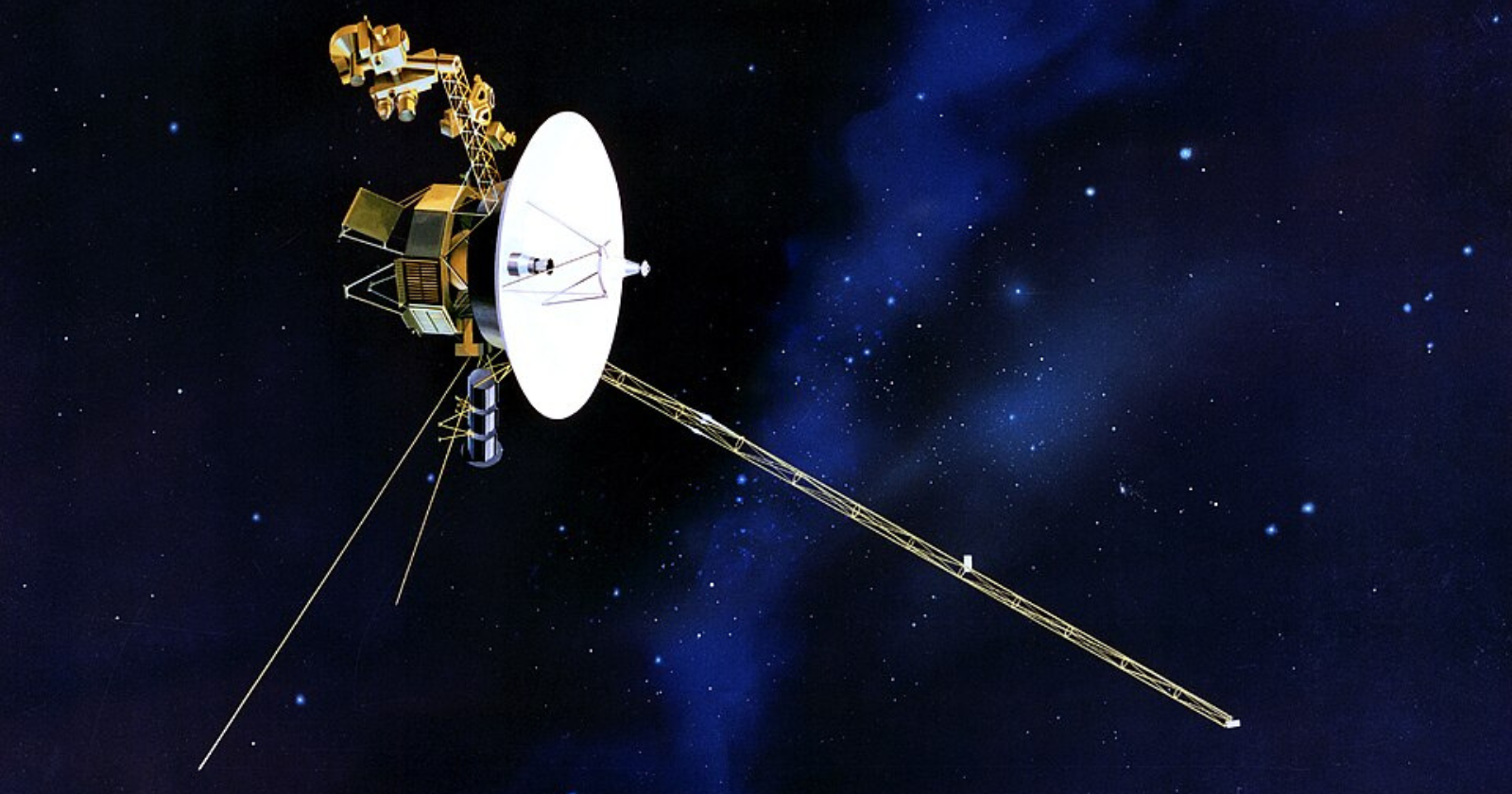
# Voyager 1: Humanity's Distant Messenger Now 16 Billion Miles from Earth
In a remarkable testament to human ingenuity, NASA's Voyager 1 spacecraft has achieved an astonishing milestone. Launched in September 1977, Voyager 1 is now over 16 billion miles away from Earth, traveling through the vast expanse of interstellar space at an impressive speed of approximately 38,000 miles per hour. As this remarkable mission continues, the communication dynamics with Voyager 1 have shifted dramatically, making it feel more like sending a letter than a swift phone call.
With a signal traveling at the speed of light taking more than 22 hours to reach the probe, engineers at NASA face a nearly two-day wait to confirm whether their commands have been received. This extraordinary distance places Voyager 1 in a unique position in the history of space exploration. Not only does it represent the pinnacle of human achievement, but it also raises intriguing questions about our ability to communicate and explore the cosmos.
## A Journey into the Unknown
Voyager 1 was launched as part of NASA's Voyager program, which aimed to study the outer planets and their moons. Initially tasked with flybys of Jupiter and Saturn, Voyager 1 has far exceeded its original mission objectives. After completing its encounters with both gas giants, the spacecraft ventured into the uncharted territories of interstellar space, embarking on a journey that would last decades.
As it travels further from the solar system, Voyager 1 is providing invaluable data about the heliosphere—the bubble of solar wind that surrounds our solar system—and the cosmic environment beyond. The probe's instruments continue to transmit data, giving scientists crucial insights into the nature of space, cosmic rays, and the magnetic fields of interstellar space.
## The Challenge of Communication
One of the most significant challenges faced by the Voyager team is the delay in communication. Given the vast distance, a command sent from Earth takes more than 22 hours to reach the spacecraft. This means that when engineers send a command to Voyager 1, they must wait nearly two days for a response, creating a unique communication rhythm.
This extended communication delay is comparable to mailing a letter rather than making a quick phone call. Each command must be carefully crafted, as the time spent waiting for a response means that any mistakes could lead to significant setbacks. Engineers must have a deep understanding of the spacecraft's systems, as well as the potential risks involved in sending commands across such vast distances.
## The Upcoming Milestone: Crossing into Interstellar Space
In November 2026, Voyager 1 is expected to achieve another historic milestone: becoming the first human-made object to pass into the interstellar medium, the space between stars. This event underscores the significance of the Voyager mission and its role in expanding our understanding of the universe.
Voyager 1 has already crossed the heliopause, the boundary marking the end of the solar wind and the beginning of interstellar space, but the full transition into the interstellar medium is a landmark event that will provide opportunities for deeper scientific inquiry. The probe is equipped with instruments designed to measure the properties of interstellar plasma, magnetic fields, and cosmic rays, allowing scientists to gather data that could reshape our understanding of the universe.
## Voyager 1: A Message to the Cosmos
The Voyager mission is not merely about exploration; it is also a profound message to any potential extraterrestrial civilizations. Each Voyager spacecraft carries a gold-plated record containing sounds and images that represent the diversity of life and culture on Earth. This "Golden Record" serves as a time capsule, a snapshot of humanity's existence that may one day be discovered by intelligent life forms in distant galaxies.
The inclusion of greetings in multiple languages, music from various cultures, and images of Earth and its inhabitants reflects humanity's desire to connect with the cosmos. As Voyager 1 continues its journey through the stars, it carries our hopes and dreams, symbolizing our quest for knowledge and connection in the vastness of space.
## The Scientific Legacy of Voyager
The scientific data collected by Voyager 1 has had a lasting impact on our understanding of the solar system and beyond. Key discoveries include the complex atmospheres of Jupiter and Saturn, the intricate ring systems of the gas giants, and the confirmation of the existence of active volcanoes on Jupiter's moon, Io. These findings have reshaped our understanding of planetary science and the dynamics of celestial bodies.
As Voyager 1 ventures further into interstellar space, it will continue to contribute to our knowledge of cosmic phenomena. The data it transmits back to Earth will help scientists study the interstellar environment and improve our understanding of how solar and cosmic events interact with one another.
## Looking Ahead: The Future of Space Exploration
The journey of Voyager 1 is far from over. As it travels through interstellar space, it serves as a beacon of hope and inspiration for future generations of scientists and explorers. The mission has paved the way for subsequent interstellar exploration projects, such as the proposed Interstellar Probe mission, which aims to study the outer heliosphere and the interstellar medium more closely.
Voyager 1's continued operation also raises questions about the longevity of technology in space. The spacecraft is powered by radioisotope thermoelectric generators (RTGs), which convert heat from the natural decay of plutonium-238 into electricity. As the power supply dwindles, engineers must carefully manage the spacecraft's systems to ensure its instruments continue to function for as long as possible.
## Conclusion: A Testament to Human Achievement
NASA's Voyager 1 stands as a remarkable testament to human achievement and our relentless pursuit of knowledge. As it journeys through the cosmos, it serves as a reminder of our place in the universe and the boundless possibilities of exploration. The challenges of communication and the anticipation of data return only add to the intrigue of this extraordinary mission.
With each passing day, Voyager 1 continues to inspire curiosity and wonder about the universe. Its journey exemplifies the spirit of discovery that drives humanity to explore the unknown, pushing the boundaries of science and technology in search of answers to the fundamental questions of existence. As it approaches new milestones and continues to send back invaluable data, Voyager 1 remains a symbol of hope, connection, and the infinite possibilities that lie beyond our home planet.