
NASA Just Released One of the Most Detailed Maps of the Night Sky Ever
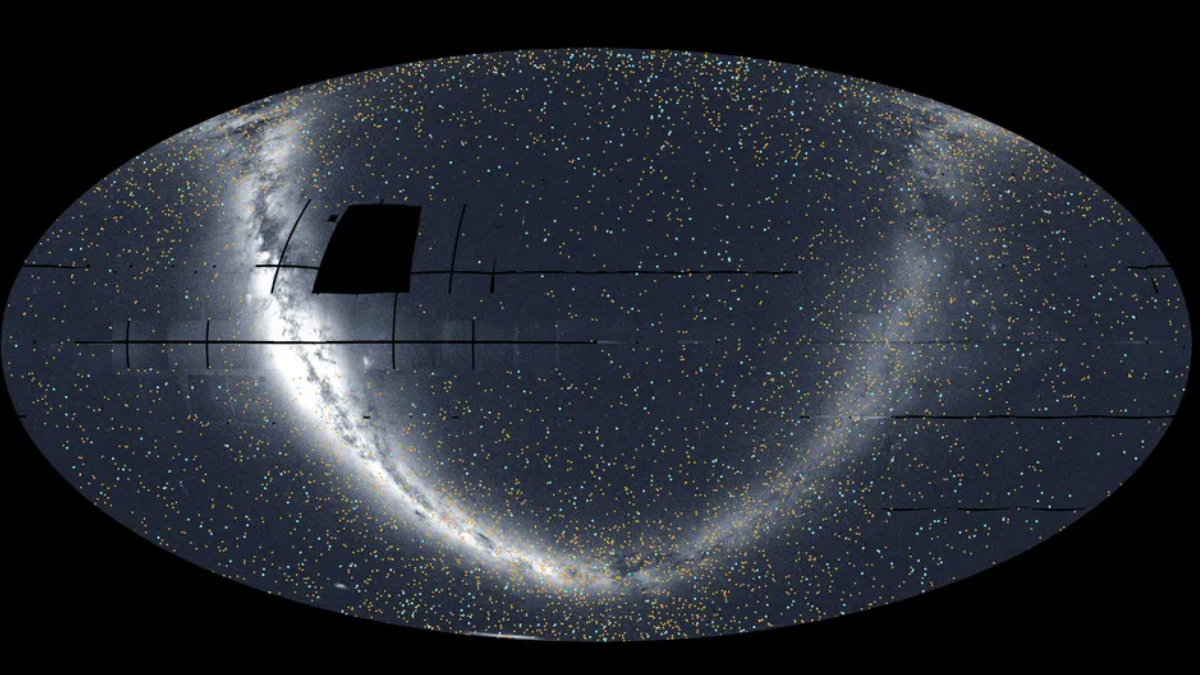
# NASA Unveils Comprehensive Map of the Night Sky: A Landmark Achievement in Astronomy
In a groundbreaking development for astronomy enthusiasts and scientists alike, NASA has released one of the most detailed maps of the night sky ever produced. This monumental achievement comes from the Transiting Exoplanet Survey Satellite (TESS) mission, which has dedicated the past eight years to observing our celestial surroundings. The new map showcases nearly 6,000 known and candidate exoplanets spread across 96 sectors of the sky, providing invaluable insights into the cosmos.
## The TESS Mission: A Brief Overview
Launched in April 2018, NASA’s TESS mission set out with a clear objective: to survey the brightest stars in our vicinity and identify exoplanets that could potentially harbor life. Unlike its predecessor, the Kepler Space Telescope, which focused on one region of the sky for an extended period, TESS employs a wide-field approach, allowing it to cover approximately 85% of the entire sky.
The mission has been instrumental in enhancing our understanding of the universe, particularly in the search for planets outside our solar system. With its advanced technology and innovative observational strategies, TESS has contributed significantly to the field of exoplanet research.
## A Closer Look at the New Sky Map
The newly released sky map is a culmination of TESS’s extensive observations and data collection efforts over the past eight years. It provides a wealth of information about the cosmos, including:
- **Exoplanets**: The map identifies nearly 6,000 known and candidate exoplanets, showcasing the vast diversity of planetary systems beyond our own.
- **Sector Coverage**: TESS has meticulously divided the sky into 96 sectors, each offering a unique glimpse into different regions of the universe. This sector-based approach allows astronomers to focus their investigations on specific areas of interest.
- **Detailed Information**: The map offers detailed information about each identified exoplanet, including its size, orbit, and distance from Earth, which is crucial for researchers studying the potential habitability of these distant worlds.
## The Importance of Exoplanet Research
Exoplanet research is a burgeoning field that holds immense significance for our understanding of the universe. These distant worlds can vary greatly in size, composition, and atmospheric conditions, providing a unique opportunity to study the formation and evolution of planetary systems.
The findings from TESS’s mission can help answer fundamental questions about the existence of life beyond Earth. By identifying planets located within their star's habitable zone—where conditions may be right for liquid water to exist—scientists can better assess the likelihood of extraterrestrial life.
## TESS’s Impact on Future Discoveries
The release of this detailed sky map opens up new avenues for future discoveries and research. Astronomers and scientists now have a comprehensive resource to explore and analyze the vast expanse of the night sky. The map’s data can be used to:
- **Guide Future Observations**: The new sky map will serve as a critical tool for astronomers planning future observations with powerful telescopes, such as the James Webb Space Telescope. By identifying promising targets, researchers can focus their efforts on planets that are most likely to yield significant findings.
- **Enhance Understanding of Planetary Systems**: The data collected by TESS will enable scientists to deepen their knowledge of how planetary systems form and evolve. This information is vital for understanding the conditions that may lead to the emergence of life.
## Public Engagement and Citizen Science
NASA’s commitment to public engagement is evident in its efforts to involve citizen scientists in the exploration of the night sky. The TESS mission has inspired numerous initiatives that allow individuals to contribute to scientific discoveries. By analyzing TESS data, members of the public can help identify exoplanets and participate in the ongoing quest to understand our universe.
This collaborative approach fosters a sense of community among astronomy enthusiasts and promotes a broader understanding of science. As more people become engaged in the exploration of the cosmos, the potential for new discoveries and insights grows exponentially.
## The Future of TESS and Exoplanet Research
As TESS continues its mission, astronomers are eager to see what new revelations await. The current sky map is just the beginning; ongoing observations will undoubtedly lead to the discovery of even more exoplanets and planetary systems. The excitement surrounding exoplanet research is palpable, and NASA’s TESS mission is at the forefront of this scientific revolution.
Researchers anticipate that TESS will provide key insights into the properties of exoplanets, including their atmospheres and potential for supporting life. These discoveries will help shape our understanding of the universe and our place within it.
## Conclusion: A New Era in Astronomy
NASA’s release of this highly detailed map of the night sky marks a significant milestone in the field of astronomy. The TESS mission has not only expanded our knowledge of exoplanets but has also opened the door to exciting new research opportunities. As we stand on the brink of a new era in space exploration, the possibilities for discovery are limitless.
With nearly 6,000 known and candidate exoplanets now charted across the sky, the potential for uncovering new worlds and understanding the cosmos has never been greater. As scientists and citizen astronomers delve into this wealth of data, the future of exoplanet research holds the promise of answers to some of humanity's most profound questions about life beyond our planet.
As we gaze up at the stars, we are reminded that the universe is vast, mysterious, and full of opportunities for exploration. The journey has only just begun, and with tools like the new TESS sky map at our disposal, we are poised to uncover the secrets of the universe like never before.