
NASA finds Earth's 'blue twin' - a scary planet where glass rains from the sky - See pics
# NASA Discovers Earth's 'Blue Twin': HD 189733 b – A Stunning Planet with a Terrifying Twist
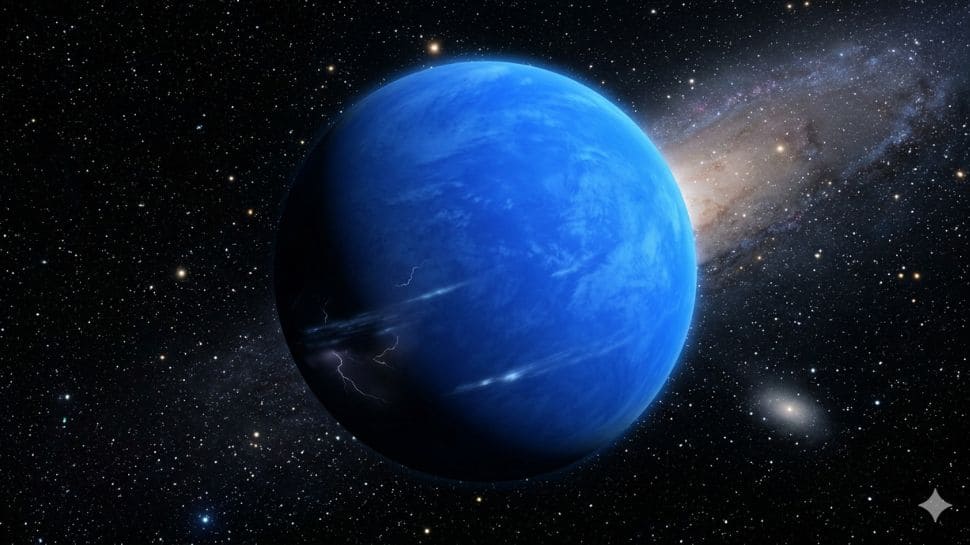
In a remarkable revelation from the cosmos, NASA has identified an exoplanet that bears a striking resemblance to Earth in its vivid blue hue. Dubbed HD 189733 b, this celestial body captivates astronomers and space enthusiasts alike with its aesthetic charm. However, beneath its beautiful exterior lies a harsh reality that challenges our perceptions of habitable worlds. With temperatures soaring and glass rain falling from the sky, HD 189733 b serves as a reminder of the extreme conditions that can exist beyond our home planet.
## The Discovery of HD 189733 b
The discovery of HD 189733 b is part of a broader effort by NASA and other space agencies to explore and understand the universe's vast array of planets. Located approximately 64 light-years away in the constellation Vulpecula, this exoplanet was first identified in 2005. Since then, astronomers have studied its atmospheric composition and environmental conditions using advanced telescopes and observational techniques.
What makes HD 189733 b particularly intriguing is its vivid blue appearance. This striking coloration is believed to be the result of silicate particles in its atmosphere, which scatter light in a way that gives the planet its distinctive look. The discovery has sparked interest not only in the scientific community but also among the public, as it raises questions about the potential for life in similarly beautiful but hostile environments.
## A Beautiful Facade Hiding a Dreadful Reality
Despite its captivating appearance, HD 189733 b is far from a paradise. The planet is classified as a "hot Jupiter," a type of exoplanet that is gas giant and orbits very close to its parent star. This proximity leads to extreme temperatures that can reach up to 1,000 degrees Fahrenheit (about 537 degrees Celsius). Such conditions are inhospitable to life as we know it, making HD 189733 b an unlikely candidate for habitation.
One of the most terrifying aspects of this alien world is its weather. Researchers have found that the planet experiences violent storms with winds howling at speeds of over 8,700 kilometers per hour (about 5,400 miles per hour). These storms are not only fierce but also serve as the catalyst for an unusual phenomenon: rain made of glass. As the atmospheric conditions churn and swirl, silicate particles condense and fall to the surface in the form of glass shards, creating a deadly environment for any potential life forms.
## Understanding the Atmosphere of HD 189733 b
The atmosphere of HD 189733 b is a subject of intense study. Scientists have utilized sophisticated instruments like the Hubble Space Telescope and the Spitzer Space Telescope to analyze the planet's atmospheric constituents. The findings reveal that it is primarily composed of hydrogen and helium, with traces of other compounds that contribute to its unique weather patterns.
The extreme temperatures and high-speed winds create an atmosphere that is both dynamic and dangerous. These conditions lead to temperature differences that drive the formation of massive storms, creating a turbulent environment that is unlike anything found on Earth. The glass rain phenomenon, in particular, has sparked fascination and fear, as it poses a significant challenge to our understanding of planetary atmospheres and weather systems.
## Implications for the Search for Extraterrestrial Life
The discovery of HD 189733 b raises important questions about the search for extraterrestrial life. While this particular planet is clearly unsuitable for life as we understand it, its existence challenges the notion of what makes a planet habitable. It serves as a stark reminder that beauty and life-sustaining conditions may not always go hand in hand.
As astronomers continue to discover new exoplanets, they are increasingly focusing on those that share characteristics with Earth. The search for "Earth-like" planets has intensified, with missions such as NASA's Transiting Exoplanet Survey Satellite (TESS) and the upcoming James Webb Space Telescope aiming to identify worlds that may harbor life. However, HD 189733 b's extreme conditions highlight the need for a more nuanced understanding of habitability, one that considers a wider range of environmental factors.
## The Role of Technology in Exoplanet Research
Advancements in technology have played a crucial role in the discovery and analysis of exoplanets like HD 189733 b. The development of more sensitive instruments and advanced observational techniques has enabled astronomers to gather valuable data about distant worlds. For instance, the use of spectroscopy allows scientists to analyze the light emitted or absorbed by a planet's atmosphere, revealing its composition and weather patterns.
The ongoing evolution of technology is expected to yield even more discoveries in the coming years. With the launch of the James Webb Space Telescope, researchers anticipate gaining deeper insights into the atmospheres of exoplanets, potentially uncovering signs of habitability or even life. As our understanding of these distant worlds expands, so too does our appreciation for the diversity of planetary systems that exist beyond our solar system.
## The Future of Exoplanet Exploration
The discovery of HD 189733 b is just one of many exciting developments in the field of exoplanet exploration. As astronomers continue their quest to find new worlds, they are also striving to understand the complexities of planetary systems and the conditions that exist within them. Future missions, such as the European Space Agency's ARIEL and NASA's Habitable Worlds Observatory, aim to further our knowledge of exoplanets and their potential for supporting life.
The exploration of exoplanets not only enhances our understanding of the universe but also has profound implications for our own planet. By studying these distant worlds, scientists can gain insights into the processes that shape planetary atmospheres and climate, ultimately informing our understanding of Earth and its future.
## Conclusion
The discovery of HD 189733 b, with its breathtaking blue appearance and terrifying weather conditions, serves as a fascinating reminder of the vastness and diversity of the universe. While this planet may not be suitable for life, it raises important questions about the nature of habitability and the complexities of planetary environments. As we continue to explore the cosmos, each new discovery adds to our understanding of the universe and our place within it. The journey of uncovering the secrets of alien worlds like HD 189733 b is just beginning, and the possibilities are as limitless as the stars themselves.