
Astronomers de-fog alien planet's cloudy skies using Webb Telescope. Know more
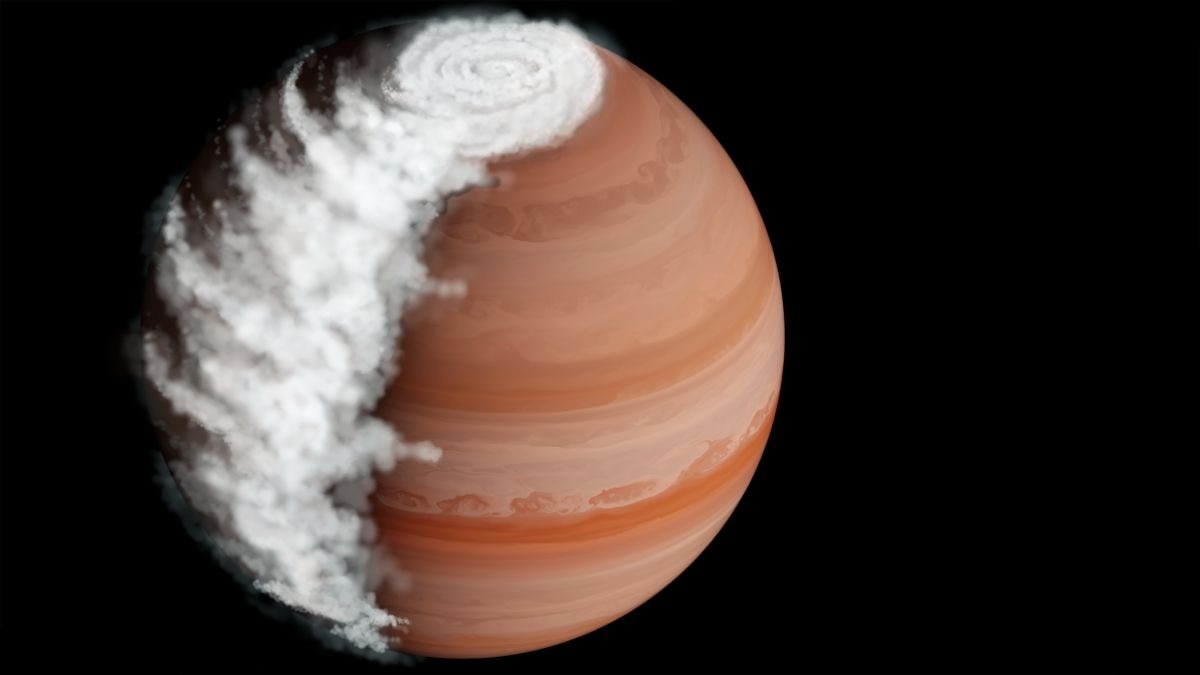
# Astronomers Unveil Secrets of Exoplanet WASP-94A b Using Webb Telescope
In a groundbreaking achievement, astronomers have harnessed the power of the James Webb Space Telescope (JWST) to peer through the dense clouds of an alien world, uncovering a daily cloud cycle on the exoplanet WASP-94A b. Situated approximately 700 light-years from Earth, this "Hot Jupiter" offers a fascinating glimpse into the complex atmospheric phenomena that characterize such distant worlds. This discovery not only enhances our understanding of WASP-94A b but also represents a significant advancement in exoplanetary research, marking a new era in our quest to unveil the mysteries beyond our solar system.
## Understanding WASP-94A b: A Hot Jupiter
WASP-94A b is classified as a "Hot Jupiter" — a type of exoplanet that shares characteristics with Jupiter but orbits very close to its parent star, resulting in extremely high surface temperatures. The conditions on this gas giant are starkly different from those on Earth, with temperatures soaring high enough to create a turbulent atmosphere filled with clouds and storms. The extreme heat leads to unique atmospheric dynamics, making WASP-94A b an intriguing subject for research.
## The Role of the James Webb Space Telescope
Launched in December 2021, the James Webb Space Telescope represents a monumental leap in our ability to observe the universe. Equipped with advanced infrared technology, JWST can penetrate the thick clouds and atmospheric compositions of distant celestial bodies that were previously difficult to study. This capability has opened new doors for astronomers seeking to understand the chemical makeup and weather patterns of exoplanets.
## Peering Through the Clouds
Using JWST, researchers were able to collect data on the atmospheric conditions of WASP-94A b, revealing a previously unseen daily cloud cycle. This observation marks a significant breakthrough, as scientists have struggled for decades to decode the atmospheric dynamics of such distant worlds. The telescope's infrared capabilities allowed astronomers to analyze the planet's spectrum, identifying various molecules and elements that contribute to its atmospheric composition.
Discoveries About the Atmosphere
The detailed observations made by JWST have unveiled a wealth of information about WASP-94A b's atmosphere. The data suggest that the planet experiences a constant cycle of cloud formation and dissipation, driven by its intense heat and proximity to its star. This daily cycle hints at the presence of silicate clouds, which could form in the planet's upper atmosphere, reflecting the complex interplay of temperature, pressure, and chemical reactions.
Implications of the Findings
The findings from JWST not only provide a clearer image of WASP-94A b's atmosphere but also have broader implications for our understanding of exoplanets in general. By uncovering the intricate weather patterns on this Hot Jupiter, scientists can refine their models of atmospheric behavior on other exoplanets, paving the way for future discoveries. This research may also offer insights into the potential habitability of other planets by highlighting the diverse atmospheric conditions that can exist in the universe.
## The Importance of Atmospheric Studies in Exoplanet Research
Studying the atmospheres of exoplanets is crucial for multiple reasons. First, it helps scientists understand the formation and evolution of planetary systems. Analyzing the chemical signatures in an exoplanet's atmosphere can reveal its history and the processes that shaped it. Secondly, it provides insights into the potential for life beyond Earth. Identifying key atmospheric components such as water vapor, carbon dioxide, and methane is essential for assessing a planet's habitability.
## Future Prospects: More Discoveries Ahead
The successful observations of WASP-94A b are just the beginning of what the James Webb Space Telescope can achieve. As astronomers continue to explore the cosmos, JWST's capabilities will allow them to study a broader range of exoplanets, including those that are more similar to Earth. Future missions could focus on identifying planets within the habitable zone of their stars, where conditions might be right for life to exist.
Collaboration and Global Efforts
This monumental discovery is a testament to the collaborative efforts of scientists across the globe. The data collected by JWST is available for researchers worldwide, fostering a culture of shared knowledge and innovation. As teams analyze the information and draw new conclusions, the scientific community can expect rapid advancements in our understanding of exoplanetary atmospheres.
## Conclusion: A New Era of Discovery
The ability to de-fog the cloudy skies of WASP-94A b using the James Webb Space Telescope represents a significant milestone in the field of astronomy. As researchers continue to analyze the data and uncover the complexities of this Hot Jupiter, they are not only expanding our knowledge of distant worlds but also igniting curiosity about the possibilities of life beyond our solar system. With the JWST's powerful capabilities, the future of exoplanet research looks brighter than ever, promising more exciting discoveries that will deepen our understanding of the universe and our place within it.
Stay tuned as astronomers push the boundaries of knowledge and explore the wonders of the cosmos, one distant planet at a time.