
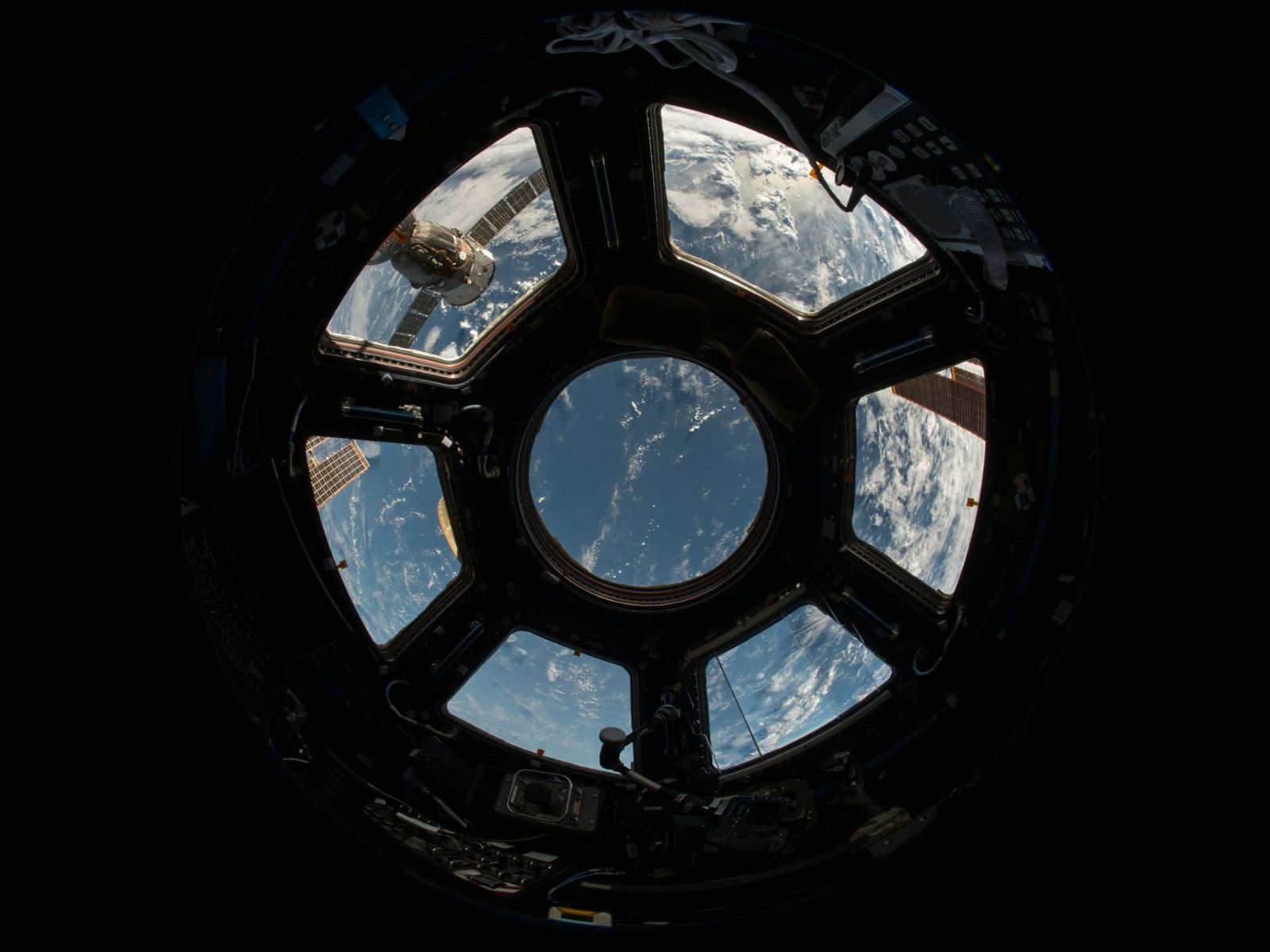
An astronaut aboard the ISS has captured a fireball in the atmosphere
# Astronaut Captures Stunning Fireball in Earth's Atmosphere from ISS: What We Know
In a remarkable display of nature’s wonders, an astronaut aboard the International Space Station (ISS) recently captured an intriguing image of a fireball streaking through Earth’s upper atmosphere. This stunning photograph not only dazzles the eyes but also raises questions about the origins of such phenomena. As NASA shares this captivating snapshot, both scientists and enthusiasts alike are eager to unravel the mystery behind this celestial event.
## The Eye-Catching Image from the ISS
The International Space Station has long served as a platform for scientific research and exploration, providing a unique vantage point for astronauts to observe our planet from above. Recently, an astronaut on board captured a breathtaking image of a fireball, a term often used to describe a bright meteor that burns up upon entering the Earth’s atmosphere. The image, shared by NASA, showcases a luminous streak of light against the backdrop of the dark expanse of space, stirring excitement among the scientific community and the public alike.
This fireball, while visually stunning, prompts a deeper inquiry into its origins. NASA has yet to determine the specific source or composition of this atmospheric phenomenon. Was it a fragment of a comet, a piece of space debris, or something entirely different? Such questions are at the forefront of scientists' minds as they analyze the event.
## Understanding Fireballs: What Are They?
To comprehend the significance of the recent fireball sighting, it’s essential to understand what fireballs are. Typically, a fireball refers to a meteor that is exceptionally bright, often visible during daylight. These meteors are remnants of asteroids or comets that enter Earth’s atmosphere at high speeds, causing them to ignite due to friction with the air.
Fireballs can vary in size, brightness, and color, often depending on their composition and entry angle. When they burn up in the atmosphere, they create a spectacular light show, sometimes accompanied by sonic booms if they are large enough and travel at supersonic speeds.
## The Science Behind the Sighting
The image captured from the ISS offers a unique opportunity for scientists to study fireballs in a way that ground-based observations cannot. From the ISS, astronauts can observe these phenomena from a different perspective, allowing for a broader understanding of their characteristics and behaviors.
NASA employs various instruments on the ISS to monitor atmospheric phenomena, including fireballs. These observations can contribute to our understanding of the frequency and distribution of meteoroids entering the atmosphere, which is crucial for both scientific research and planetary defense strategies.
## Engaging the Public: Why This Matters
The public's interest in space and celestial events has surged in recent years, fueled by advances in technology and social media. NASA’s release of the ISS fireball image taps into this growing fascination, inviting people to engage with and learn about space science.
Educational outreach is vital in helping the public understand the significance of such phenomena. By sharing captivating images and stories, NASA encourages curiosity and interest in science, technology, engineering, and mathematics (STEM) fields.
Moreover, the excitement surrounding fireballs and other celestial events can inspire the next generation of scientists and explorers. As people marvel at the beauty of the universe, they may be motivated to pursue careers in space exploration and research, ultimately contributing to our understanding of the cosmos.
## Ongoing Research and Future Discoveries
The capture of the fireball image is just one instance of ongoing research in atmospheric sciences and space observation. Scientists are continually studying meteoroids and their effects on the Earth’s atmosphere. Programs like the American Meteor Society and various meteor observation initiatives provide platforms for both amateur and professional astronomers to report and analyze meteoric events.
In addition, the data collected from the ISS contributes significantly to our understanding of space weather and its impact on Earth. As we continue to face challenges such as climate change and natural disasters, understanding the behavior of celestial objects may be more critical than ever.
## Conclusion: A Call to Explore the Unknown
The recent imagery captured by an astronaut aboard the ISS serves as a reminder of the wonders that lie in our universe. While the origin of the fireball remains an enigma, the excitement surrounding its appearance brings together scientists, enthusiasts, and curious minds in a quest for knowledge.
As we look to the stars, we are reminded of the vastness of our universe and the myriad of mysteries it holds. Events like these not only inspire awe but also highlight the importance of scientific inquiry and exploration. NASA’s commitment to sharing these extraordinary moments encourages us all to continue exploring the unknown, deepening our understanding of the world beyond our own.
In the ever-evolving field of space science, each new discovery propels us toward a future filled with potential. Whether it’s through capturing breathtaking images or engaging with the public, the journey to uncover the secrets of our universe has just begun. So, as we gaze up at the night sky, let us remember that there is much more to discover, and every fireball, every meteor, and every star holds a story waiting to be told.